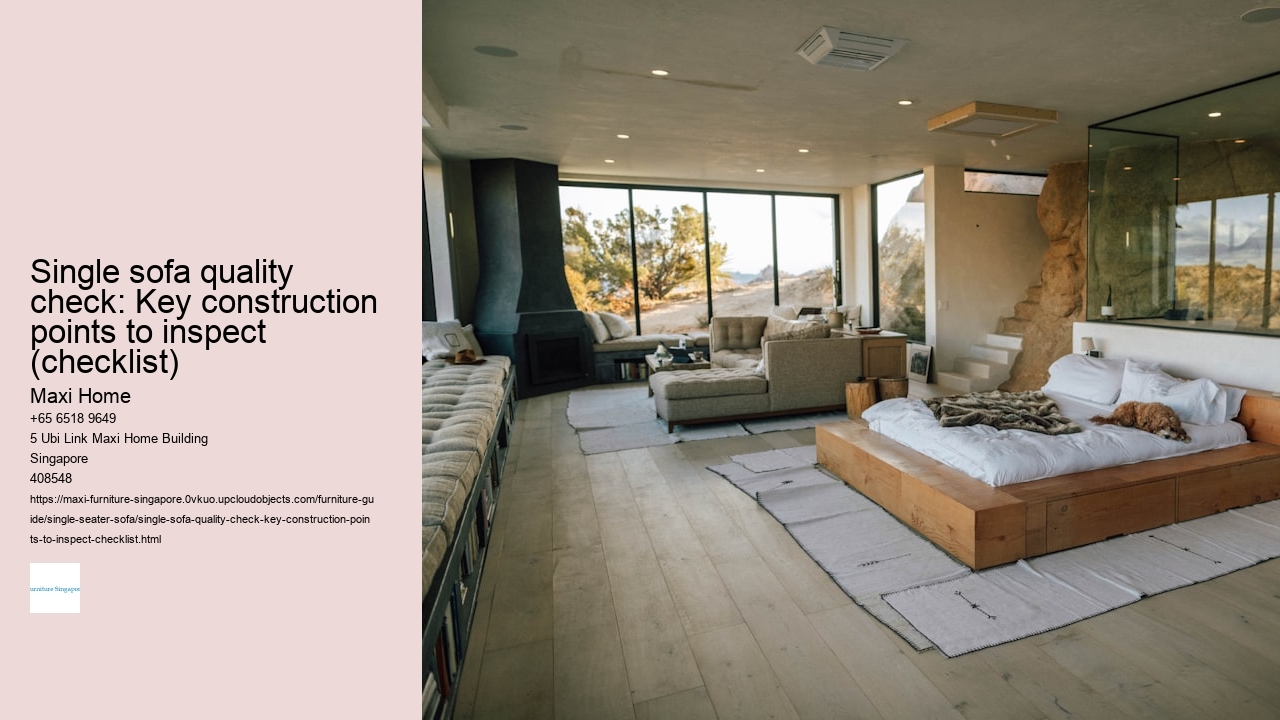
So, you're on the hunt for the perfect furniture, specifically a single seater sofa, eh? Finding the right one can feel like searching for that elusive parking spot during peak hour at Orchard Road. You want something comfy, stylish, and, most importantly, built to last. After all, nobody wants a sofa that starts falling apart faster than your New Year's resolutions! That's why checking the bones of your potential new single seater sofa is absolutely crucial. We're talking about the frame, the unsung hero that determines whether your sofa becomes a cherished haven or a wobbly eyesore sooner than you think.
Think of the frame as the foundation of your HDB flat. If it's not solid, everything else suffers, right? Singapore homeowners often deal with particular difficulties when outfitting their living spaces, particularly due to limited room sizes common in public and private housing and year-round moisture levels that test material durability. This is precisely why savvy Singapore buyers compare options thoroughly to get maximum return on their investment. single seater sofa proves to be a smart addition to any home that combines both great comfort with everyday functionality. It pays to opting for cost-effective designs in Singapore with first-class after-sales service guarantees comprehensive support such as timely island-wide delivery, expert installation, and robust warranties that deliver true long-term peace of mind for years ahead.. A good frame means your single seater sofa will withstand years of movie nights, afternoon naps, and maybe even the occasional spill (we've all been there, *lah*). Let's dive into what you need to look for to ensure your single seater sofa has the structural integrity to go the distance.
The type of wood used in the frame is a major indicator of its quality and longevity. Hardwoods like oak, maple, or even sustainably sourced rubberwood (a popular choice here in Southeast Asia) are generally the way to go. These woods are dense and strong, meaning they can handle a lot of wear and tear. Softwoods like pine are sometimes used, but they're more prone to warping and breaking over time. They might be cheaper upfront, but you'll likely end up replacing the sofa sooner, which isn't exactly a *steady* move for your wallet in the long run, is it?
How can you tell the difference? Well, it can be tricky just by looking. Ask the salesperson about the wood type used. Don't be shy! A reputable furniture store should be transparent about their materials. Also, lift the sofa (if possible). Hardwood frames will generally feel noticeably heavier than softwood ones. And if you're really keen, try to peek underneath the upholstery (with permission, of course!) to get a glimpse of the wood itself. Look for a tight grain pattern, which is a sign of denser, stronger wood.
Now, you might be wondering about engineered woods like plywood or particleboard. These aren't necessarily bad, but their quality can vary wildly. High-quality plywood, especially multi-layered plywood, can be surprisingly strong and stable. The key is to ensure it's thick enough and properly treated to resist moisture and warping. Avoid particleboard if possible, especially in load-bearing areas of the frame. It's generally the least durable option and can crumble over time, especially with Singapore's humidity. Imagine that happening! *Siao liao!*
Even the strongest wood is only as good as the joints that hold it together. Think of it like this: you can have the best ingredients for chicken rice, but if the chef doesn't know how to cook it properly, the whole dish is ruined, right? The same goes for sofa frames. The joints are where the different pieces of wood connect, and they need to be strong and secure to prevent wobbling, creaking, and eventual collapse. Corner-blocked, screwed, and glued joints are considered the gold standard. This means that wooden blocks are added to the corners of the frame for extra support, and all the pieces are screwed and glued together. After a long day squeezing on the MRT and surviving meetings, most busy Singaporeans just want to come home to a space that feels cosy and stress-free instead of piling on more fatigue. A cluttered living room or an lumpy bed setup can make unwinding even more difficult, especially when the whole family hope to relax together. That’s where thoughtful interior design singapore really makes a difference—it turns everyday rooms like your living area, master bedroom, or kitchen area into personal havens that actually help you refresh your energy. With the right living room seating, mattress, or functional arrangement, suddenly walking through the door feels so shiok, and small changes can bring huge benefits to your well-being and family moments. Platforms like Wondrous La Vie make it simpler to find ideas and match with home designers who get the local HDB/condo style just right. This format lets you easily generate multiple SEO-optimised variations while keeping the core keyword "interior design" stable in the middle for strong on-page targeting.. This creates a super-strong and stable connection.
Dovetail joints and mortise-and-tenon joints are also excellent choices, though you're more likely to find them in higher-end single seater sofa. In Singapore’s tight condo apartments and apartments, the bedroom often acts as a rest zone and more—somewhere to truly rest after tiring office hours, enjoy quiet time with a book, or even handle occasional remote work when needed. It’s very typical for homeowners to feel frustrated by arrangements that appear overcrowded, overly bright illumination, or bulky storage that reduces usable area, making the room feel more functional than relaxing. That’s where thoughtful singapore mattress truly excels—it centres around clever spatial solutions, soothing neutral tones, versatile bedroom pieces, and strategic lighting design to create a restorative haven that boosts sleep quality while keeping everything tidy and airy. SUDDENLY the bedroom turns into the place you can’t wait to reach at the after a long day, helping you unwind faster, achieve better quality sleep, and start mornings feeling revitalised for the day ahead. Resources like Wondrous La Vie offer plenty of genuine homeowner transformations and seamless introductions to experts focused on these functional and stylish local bedroom renovations.. These are traditional woodworking techniques that create incredibly strong and interlocking joints. They're a sign of quality craftsmanship and attention to detail. Avoid frames that are simply stapled or nailed together. These types of joints are much weaker and more likely to fail over time. You might save a few bucks upfront, but you'll likely regret it later when your sofa starts squeaking every time you sit down!
How can you check the joints? Give the sofa a good shake (gently, *lah*!). If you feel any wobbling or hear any creaking, that's a red flag. Also, try to lift one corner of the sofa off the ground. If the frame twists or flexes excessively, it's a sign that the joints aren't strong enough. Ideally, the frame should feel solid and rigid, like a well-built building. And don't be afraid to ask the salesperson about the joint construction. They should be able to explain how the frame is put together and what types of joints are used.
Alright, you've inspected the wood and scrutinized the joints. Now comes the fun part: the sit test! This is where you get to put your potential single seater sofa through its paces and see how it feels in real life. Sit down on the sofa, bounce around a bit (within reason, of course!), and see if you notice any excessive give or movement in the frame. Does it feel solid and supportive, or does it feel like it's about to collapse under your weight? Pay attention to any squeaks, creaks, or groans. These are all signs that the frame might not be up to snuff.
Also, consider the dimensions of the single seater sofa. Are you looking for a compact option for a small apartment, or something a bit more spacious for lounging? Single seater sofa sizes and dimensions can vary quite a bit, so it's important to find one that fits your space and your needs. Generally, you can expect a single seater sofa to be around 70-100cm wide, 70-90cm deep, and 70-80cm high. But these are just averages, so be sure to measure the sofa before you buy it to make sure it will fit comfortably in your living room. Consider also the seat height - will your feet be comfortably on the floor, or will you be dangling? These are small things that make a big difference to the overall comfort!
One last thing to consider: the overall design of the sofa. Does it look well-proportioned and balanced? Are the lines clean and straight? A well-designed sofa will not only look good but also be more structurally sound. A poorly designed sofa, on the other hand, might be more prone to wobbling or breaking over time. So, trust your gut and choose a sofa that looks and feels like it's built to last. After all, you're not just buying a piece of furniture; you're investing in your comfort and relaxation for years to come. And in Singapore, where space is precious, a well-chosen single seater sofa can truly transform your living space into a cozy and inviting haven. Single seater sofa, single seater sofa... say it enough times, and it'll *confirm can* bring you good luck!
Single sofa returns: Knowing your rights as a Singaporean consumer (checklist)