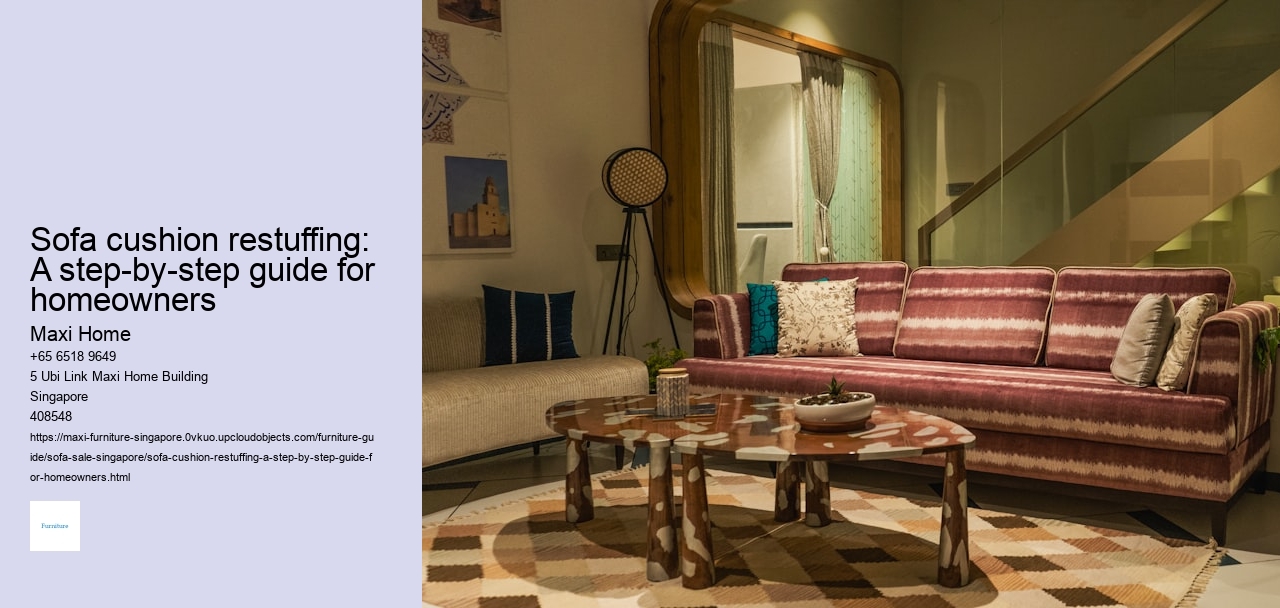
Sofa cushion restuffing: A step-by-step guide for homeowners

Sofa cushion restuffing: A step-by-step guide for homeowners

Introduction: Why Restuff Your Sofa Cushions?

```html

Okay, so you've finally got your own place – a BTO flat, maybe? Congrats! Setting up your living room can be exciting, but also, let's be real, a bit of a headache, right? Especially when you start thinking about furniture. You want something stylish, comfy, and, most importantly, something that doesn't break the bank. After all, you still need to save up for that dream holiday, *lah*!

Now, let's talk about your sofa. It's the heart of your living room, the place where you chill after a long day at work, binge-watch Netflix, and entertain friends. But what happens when those cushions start to sag? You know, when you sink in and it's not quite as supportive as it used to be? Do you automatically think you need to chuck the whole sofa and start searching for a sofa sale Singapore? Not so fast!

Before you rush out to spend a small fortune on a new sofa, consider this: restuffing your existing sofa cushions might be the perfect solution. Seriously! It's often cheaper than buying new, and it's way more sustainable. Think about it – you're giving your beloved sofa a new lease on life, reducing waste, and saving money all at the same time. Win-win-win, right? Plus, you get to customize the comfort level to *exactly* how you like it. Firm? Soft? It’s all up to you!

This guide is here to walk you through the process of restuffing your sofa cushions, step by step. We’ll cover everything from choosing the right filling to actually getting your hands dirty (don't worry, it's not as scary as it sounds!). Whether you're a seasoned DIY enthusiast or a complete newbie, we'll give you all the tips and tricks you need to get the job done. So, let's get started and breathe new life into your sofa!

Is Restuffing Right for You? Weighing the Pros and Cons

Alright, before we dive into the nitty-gritty, let's take a moment to figure out if restuffing your sofa cushions is *really* the right move for you. It's not a magic bullet, and it's important to be honest with yourself about the condition of your sofa. After all, sometimes, a new sofa *is* the best answer. But, more often than not, restuffing is a surprisingly effective option. You might be surprised!

Let's start with the pros. The biggest one? Cost savings. A good quality sofa sale Singapore can still set you back a significant amount of money, especially if you're looking for something stylish and durable. Restuffing, on the other hand, is significantly cheaper. You're only paying for the filling material, which can range in price depending on what you choose, and maybe a few basic tools. Think of all the *makan* you can buy with the money you save! Plus, it's environmentally friendly. You're keeping your old sofa out of the landfill, which is always a good thing.

Another big advantage is customization. When you buy a new sofa, you're stuck with whatever firmness and support the manufacturer decided on. But when you restuff your cushions, you get to choose the exact type of filling and the amount you use. Want super-plush cushions that you can sink into? Go for it! Prefer something firmer that provides more support? No problem! It’s all about creating the perfect lounging experience, just for you.

Now, for the cons. After a long day squeezing onto the MRT and powering through meetings, most Singaporeans just want to return home to a space that feels warm and relaxing instead of making things worse. A disorganised space or an uncomfortable bedroom can make unwinding even harder, especially when the kids and parents hope to relax together. That’s where thoughtful Landed House Interior Design really makes a difference—it turns everyday rooms like your hall, master bedroom, or kitchen into personal havens that actually help you refresh your energy. With the right couch, bed mattress, or functional arrangement, suddenly walking through the door feels damn shiok, and small changes can bring massive difference to your well-being and family moments. Places like Wondrous La Vie make it easier to find ideas and connect with interior designers who get the the Singaporean home feel spot on. This format lets you easily generate multiple SEO-optimised variations while keeping the core keyword "interior design" stable in the middle for strong on-page targeting.. Singapore homeowners often must navigate specific hurdles when buying new furniture, particularly due to limited room sizes common in public and private housing and constant high humidity that affects furniture longevity. This is the very why wise homeowners shop very thoughtfully to get maximum return on their investment. sofa sale singapore emerges as a truly outstanding addition to any home that provides both lasting comfort and smart practicality. It pays to investing in competitively priced options in Singapore with excellent after-sales service promises you total support with features like efficient island-wide delivery, professional-grade installation, and long-lasting warranties that deliver true long-term peace of mind for years ahead.. Restuffing can be a bit time-consuming, especially if you're doing it for the first time. It requires some effort and attention to detail. Also, if your sofa frame is damaged or the fabric is badly torn, restuffing the cushions won't solve the underlying problem. In those cases, you might need to consider reupholstering or, yes, even buying a new sofa. But hey, even if you decide to buy new, knowing about restuffing is good knowledge to have, right?

So, how do you decide? Take a good look at your sofa. The living room is typically the initial area guests see and where the whole household gathers at night, so it is logical to want furniture that appears stylish, hides wires cleanly, and doesn’t make the room feel smaller than it already is in typical Singapore homes. Many people deal with clunky legacy furniture or cheap units that wobble, collect dust easily, or just don’t match the modern vibe they’re aiming for. That’s exactly where a well-chosen furniture store singapore comes into play—it delivers streamlined compartments for media devices, streaming players, and remotes while serving as an elegant centrepiece that brings the room together seamlessly with sharp modern edges, clever storage sections, and luxurious surfaces. SUDDENLY the TV area becomes neat and deliberate, the area feels more spacious and cohesive, and movie nights become even more enjoyable without the disorder stealing attention. Exploring handpicked selections on places like Wondrous La Vie lets you find designs that fit your space perfectly, from minimalist to luxurious, so your living room upgrade feels effortless and spot-on.. Are the cushions sagging and losing their shape? Is the fabric still in good condition? Is the frame sturdy? If the answer to these questions is mostly "yes," then restuffing is definitely worth considering. If not, it might be time to start browsing those sofa sale Singapore catalogues. But give restuffing a thought – you might just surprise yourself with how much you can save and how good your "old" sofa can look!

Choosing the Right Filling: A Guide to Comfort and Support

Okay, you've decided to take the plunge and restuff your sofa cushions. Awesome! Now comes the fun part: choosing the right filling. This is where you really get to customize the comfort level of your sofa. But with so many options available, it can be a little overwhelming. Don't worry, we're here to break it down for you.

First, let's talk about the different types of filling. Here are some of the most common options:

  • Polyester Fiberfill: This is the most affordable option and is great for creating a soft, plush feel. It's lightweight and easy to work with, but it tends to flatten out over time, so you might need to restuff more frequently. Think of it as the "budget-friendly" option.
  • Polyurethane Foam: This is a more durable option than polyester fiberfill and provides better support. It comes in different densities, so you can choose the firmness level you prefer. It's a good all-around choice for most sofas.
  • Memory Foam: This is the same material used in memory foam mattresses. It conforms to your body shape and provides excellent support and pressure relief. It's a good option for people with back pain or those who want a really luxurious feel. It can be a bit pricier, though.
  • Feather and Down: This is the most luxurious option and provides a very soft, plush feel. It's also very expensive and requires more maintenance, as the feathers can shift and clump together over time. Think of it as the "atas" option.
  • Mixed Fills: Some people like to use a combination of different fillings to get the perfect balance of comfort and support. For example, you could use a core of polyurethane foam for support and then wrap it with a layer of polyester fiberfill for softness.

When choosing a filling, consider your budget, your comfort preferences, and the type of sofa you have. For example, if you have a modern sofa with clean lines, you might want to choose a firmer filling like polyurethane foam to maintain the shape. If you have a more traditional sofa, you might prefer a softer filling like polyester fiberfill or feather and down.

Also, think about how you use your sofa. If you spend a lot of time lounging and watching TV, you might want a softer filling that you can sink into. If you use your sofa for entertaining guests, you might want a firmer filling that provides more support. Ultimately, the best filling is the one that feels the most comfortable to you. Don't be afraid to experiment and try out different options until you find the perfect fit. After all, you want your sofa to be the most comfortable spot in your home, right? And remember to check for sofa sale Singapore deals on filling materials too!

Step-by-Step Guide to Restuffing Your Sofa Cushions

Alright, you've got your filling, you've got your tools, and you're ready to get started. Let's do this! Restuffing your sofa cushions might seem a little daunting at first, but trust us, it's totally doable. Just follow these step-by-step instructions, and you'll be lounging on your newly restuffed sofa in no time.

Step 1: Gather Your Materials

Before you start, make sure you have everything you need. You'll need:

  • Your chosen filling material
  • A seam ripper or small scissors
  • A sewing machine or needle and thread (for closing up the cushions)
  • Measuring tape
  • Scissors or a utility knife (for cutting foam, if necessary)
  • Optional: Fabric glue or spray adhesive (for holding filling in place)

Step 2: Open the Cushions

Carefully use the seam ripper or scissors to open up one side of the cushion cover. Try to open it along an existing seam to make it easier to sew back up later. Be careful not to damage the fabric!

Step 3: Remove the Old Filling

Take out the old filling and discard it. If the old filling is just a bit flattened but otherwise in good condition, you can fluff it up and reuse it to supplement the new filling. But if it's lumpy, stained, or smells funky, it's best to toss it. You don't want any *chiobu* smells hanging around, right?

Step 4: Measure and Cut the New Filling (if necessary)

If you're using foam, you'll need to measure and cut it to the right size. Use the old filling as a template, or measure the inside of the cushion cover. Make sure the foam is slightly larger than the cover to create a snug fit.

Step 5: Stuff the Cushions

Now comes the fun part! Start stuffing the cushion cover with the new filling. If you're using polyester fiberfill, fluff it up as you go to create a more even distribution. If you're using foam, carefully insert it into the cover. Use fabric glue or spray adhesive to hold the filling in place, if desired. This is especially helpful if you're using a mixed filling.

Step 6: Close the Cushions

Once the cushion is stuffed to your liking, it's time to close it up. If you have a sewing machine, use it to sew the opening closed. If you don't have a sewing machine, you can sew it by hand using a needle and thread. Use a sturdy stitch and make sure the seam is secure. You don’t want it to burst open when you sit on


Assessing Your Cushions: Identifying the Problem & Materials Needed

Okay, lah, let's talk about those sofa cushions. You sink into your sofa after a long day at work, right? But what happens when instead of that comfy hug, you get… well, nothing? A flat, lifeless cushion is no fun one. Before you rush out for a sofa sale Singapore, let's see if we can revive what you already have. Sometimes, a little DIY can save you a steady amount of money.

First things first, let’s get real about your cushions. Are they looking a bit sad? Maybe they're flatter than a prata after a morning rush. Or perhaps they've developed lumps and bumps in all the wrong places. These are classic signs your cushions are crying out for help. Don’t worry, it happens to the best of us! Even those fancy sofas from that sofa sale Singapore will eventually need some TLC.

So, how do you know for sure if it’s restuffing time? Give your cushions the "squish test." Press down firmly. Does the cushion spring back with a bit of oomph, or does it just stay… squished? If it’s the latter, it’s confirm time to consider restuffing. Another tell-tale sign is uneven filling. Feel around for areas where the filling has clumped together, leaving other parts feeling empty. It's like when you try to spread kaya on your toast and it all ends up in one corner, like that.

Now, let’s talk filling options. This is where things get interesting. There are a few popular choices, each with its own pros and cons.

  • Foam: This is a common choice, especially for back cushions. It provides good support and comes in various densities. High-density foam is firmer and more durable, while low-density foam is softer and more affordable. Think of it like choosing between a firm bak kwa and a softer bak kwa – both are good, just different! Over time, foam can degrade, losing its shape and support, which is when restuffing becomes necessary.

  • Polyester Fiber: This is a budget-friendly option that’s soft and fluffy. It's often used in back cushions and throw pillows. However, it tends to flatten out more quickly than foam, so you might need to restuff more often. Polyester fiber is like that pasar malam plushie – comfy for a while, but not built to last forever.

  • Feathers and Down: If you're after luxurious comfort, feathers and down are the way to go. They're incredibly soft and mold to your body. However, they require regular fluffing to maintain their shape and can be more expensive. Plus, if you have allergies, you might want to steer clear. It's like staying at a fancy hotel versus your own place – both are great, but one requires a bit more effort, right?

  • Combination Fills: Some cushions use a combination of fillings, such as a foam core wrapped in polyester fiber or feathers. This can provide a balance of support and comfort. It's like having chicken rice with both roasted and steamed chicken – the best of both worlds!

Before you even think about starting, you'll need to gather your supplies. No point starting halfway and realizing you're missing something, right? Here's a basic checklist:

  • New Filling: Obviously! Choose the type and amount based on your cushion size and desired firmness.
  • Scissors or Seam Ripper: For carefully opening the cushion covers.
  • Sewing Machine or Needle and Thread: For closing up the covers after restuffing.
  • In Singapore’s fast-paced life, stepping into your home to a space that feels properly relaxing can make all the difference after a long day of meetings and travel. Many homeowners start by eyeing improvements for their hall or sleeping space, hoping for pieces that appear elegant while truly cozy enough for everyday living. That’s exactly why sofa set makes the difference—it brings that beautiful combination of sophisticated style, high-quality fabrics and finishes, and thoughtful comfort that turns standard areas into havens you can’t wait to return to unwinding in. Imagine melting into a plush sofa after dinner or feeling truly rested on a high-quality mattress that cradles your body perfectly; suddenly, your home feels more like a true escape instead of just another place. Exploring handpicked collections on sites such as Wondrous La Vie helps you find these furniture without the stress, making it easier to create a space that’s both beautiful and restorative..
  • Measuring Tape: To measure your cushions and ensure you buy the right amount of filling.
  • Pillow Insert Liner (Optional): If your cushion covers are thin or you want extra protection.
  • Gloves (Optional): To keep your hands clean, especially when working with fiber or feathers.

Choosing the right filling is important, but so is the amount. Too little, and your cushions will still be sad and saggy. Too much, and they'll be overstuffed and uncomfortable. A good rule of thumb is to measure your existing filling (if possible) or estimate based on the size of your cushion cover. It's better to have a little extra than not enough, lah. You can always remove some if needed.

Don't be intimidated leh! Restuffing sofa cushions is a pretty straightforward project, even if you're not a seasoned DIY-er. With a little planning and the right materials, you can breathe new life into your tired old cushions and save yourself a trip to that sofa sale Singapore. Plus, there's a certain satisfaction that comes from fixing things yourself, you know? Next up, we’ll dive into the actual restuffing process, step-by-step. Steady pom pi pi!

Step-by-Step: Removing Old Filling & Cleaning the Cushion Covers

Safety First

Before you even *think* about ripping open those cushions, safety first, okay? We're dealing with potentially old materials, dust mites, and who-knows-what-else hiding inside. Grab a dust mask – those haze days have taught us the importance of respiratory protection, haven’t they? – and some gloves. It's also a good idea to wear old clothes you don't mind getting a bit dusty, just in case. And if you're particularly sensitive to dust or have allergies, maybe rope in a helper, lah. Trust me, a little precaution goes a long way in avoiding a sneezing fit that lasts till next week.

Opening Carefully

Now, the moment of truth: opening the cushion covers. Most covers have a zipper, but sometimes you find sneaky seams that have been sewn shut. If it's a zipper, gently unzip it – no need to Hulk smash it open! For sewn seams, use a seam ripper or a small pair of scissors to carefully snip the thread. Take your time and avoid cutting the fabric itself; you don't want to create more work for yourself later. It's like trying to open a stubborn durian – patience is key to avoiding a prickly situation. Remember, slow and steady wins the cushion-restuffing race.

Filling Removal

Alright, the cover's open – prepare for the… avalanche? Hopefully not! Gently pull out the old filling. You might find it's all clumped together or has seen better days. Have a large trash bag ready to receive the old filling. Some people like to reuse old filling if it's still in relatively good condition, but honestly, unless it's high-quality down or feathers, it's usually best to replace it. Think of it as giving your sofa a fresh start. Plus, you don't want to risk reintroducing any lingering dust mites or allergens into your freshly cleaned covers, right?

Cover Cleaning

With the old filling out, it's time to tackle the cushion covers. The cleaning method depends entirely on the fabric type. Check the care label – it's your best friend in this situation. Some fabrics can be machine washed on a gentle cycle, while others require dry cleaning. For delicate fabrics, hand washing might be the safest bet. No label? When in doubt, test a small, inconspicuous area first to see how the fabric reacts to the cleaning agent. After washing, air dry the covers, preferably outdoors, but away from direct sunlight to prevent fading. Nobody wants mismatched cushions after all that hard work!

Stain Treatment

Before you even think about washing, pre-treat any stubborn stains. There are tons of stain removers available in Singaporean supermarkets, but you can also try natural remedies like baking soda paste for oily stains or vinegar for general grime. Apply the stain remover to the affected area and let it sit for a few minutes before gently blotting it with a clean cloth. After those endless workdays and the routine commute crush, nothing beats coming home to a hall that actually encourages relaxation instead of stressing you out more. Many local homeowners notice their current seating just isn’t cutting it—too hard, faded, or simply not comfortable enough for family movie time or relaxed Sundays with the children. That’s precisely where luxury furniture truly shines—it blends timeless style, supple premium upholstery, and clever ergonomic design so you can sink in and fully chill without your back complaining later. Visualise the whole family gathering there naturally, talking during dinner or watching dramas together, because the space now feels warm and welcoming. Choosing the perfect piece through trusted sites like Wondrous La Vie takes the guesswork out, letting you uncover that perfect piece that elevates your entire home vibe without the usual reno headaches.. Avoid rubbing vigorously, as this can damage the fabric. Sometimes, you might need to repeat the process a few times to completely remove the stain. Remember, persistence is key – just like finding that perfect sofa sale in Singapore, sometimes you gotta work for it!

Selecting Appropriate Filling

Choose the right filling material based on your comfort preferences and budget. Options include polyester fiber, down feathers, foam, or a blend. Consider the desired firmness, support, and longevity of the cushion when making your selection, as each material offers different characteristics.

Assess Cushion Condition

Before restuffing, evaluate the existing cushion's state. Check for tears in the fabric, worn seams, or severely flattened filling. Addressing these issues beforehand ensures a more effective and longer-lasting restuffing result, preventing premature wear and tear on the new filling.

Restuffing and Finishing

Carefully insert the chosen filling into the cushion cover, ensuring even distribution. Avoid overstuffing, which can lead to discomfort and strain on the seams. Once filled, securely close the cushion opening using a needle and thread or a zipper, ensuring a neat and durable finish.

Stuffing Smart: Techniques for Even Distribution & Optimal Comfort

Let's be honest, sinking into a saggy sofa cushion after a long day just isn't the same, is it? Your sofa, furniture anchor for relaxation and socialising, starts feeling less like a haven and more like… well, a bit of a pain. Before you rush out looking at the latest sofa sale Singapore has to offer, consider this: could a simple cushion restuffing be the answer? It’s often easier (and cheaper!) than you think. Plus, you get to keep the sofa you already love!

Is Your Sofa Cushion Begging for Help? Spotting the Signs

Okay, so how do you know it's time for a cushion intervention? It's usually pretty obvious. Think about it: Do you find yourself constantly rearranging the cushions, trying to find that "sweet spot" that doesn't exist anymore? Are your cushions looking deflated, lumpy, or just plain sad? Maybe you’re even feeling the frame of the sofa through the cushion – ouch! These are all classic signs that your cushion filling has given up the ghost.

Another telltale sign? Uneven wear. Perhaps your favourite spot on the sofa is noticeably flatter than the rest. Or maybe the corners of the cushions are starting to droop. And sometimes, it's not just about comfort. Old, compressed fillings can harbour dust mites and allergens, which isn't ideal, especially if you've got little ones or allergy sufferers in the house. Time to do something, right? Don't worry, it's confirm can!

Gather Your Arsenal: Tools and Materials for Cushion Rescue

Alright, time to get practical! Before you dive in, you'll need to assemble your restuffing toolkit. Here's what you'll need:

  • New Cushion Filling: This is the star of the show! We'll get into the different types in a bit, but options range from budget-friendly polyester fiberfill to more luxurious down or feather blends.
  • Scissors or Seam Ripper: For carefully opening up the cushion. Take your time here; you don't want to accidentally tear the fabric.
  • Sewing Machine or Needle and Thread: For closing up the cushion after you've added the new filling. A sewing machine makes the job faster, but hand-sewing works just fine, especially for smaller cushions.
  • Measuring Tape: To measure the cushion and determine how much filling you'll need.
  • Scale: To weigh the old filling and use as a guide for the new filling.
  • Optional: Cushion Liner Fabric: If the original cushion cover is thin or damaged, consider adding a liner to prevent the new filling from poking through.

And of course, a clean, flat workspace is essential. Maybe throw down an old sheet or some newspaper to protect your floor. Think of it as your cushion operating theatre! Now, let's talk about fillings…

Decoding Cushion Fillings: Choosing the Right Stuff

This is where things get interesting! The type of filling you choose will significantly impact the comfort and longevity of your cushions. Here’s a quick breakdown of some popular options:

  • Polyester Fiberfill: This is the most affordable and readily available option. It's lightweight, hypoallergenic, and easy to work with. However, it tends to flatten out over time and may not be as durable as other fillings. Good for cushions that are used less often.
  • Down and Feather Blend: For the ultimate in luxury and softness, down and feather blends can't be beat. They're incredibly comfortable and conform to your body shape. However, they're also the most expensive option and require special care (like professional cleaning). Plus, they might not be ideal if you have allergies.
  • Foam: Foam comes in various densities and types, from soft and squishy to firm and supportive. High-density foam is a good choice for cushions that need to hold their shape, like seat cushions.
  • Shredded Foam: Shredded foam offers a good balance of comfort and support. It's more resilient than fiberfill and less expensive than down. It's also a good option for people with allergies.
  • Combination Fills: Some cushions use a combination of fillings, like a foam core wrapped in down or fiberfill. This can provide the best of both worlds: support and comfort.

Consider your budget, lifestyle, and desired level of comfort when making your decision. If you're unsure, ask the staff at your local sofa sale Singapore store; they can often provide helpful advice on different filling types. They might even point you towards a sale on filling materials! Don’t be shy to ask, okay?

The Restuffing Process: A Step-by-Step Guide

Okay, deep breath! It's time to get your hands dirty. Here's a step-by-step guide to restuffing your sofa cushions:

  1. Open the Cushion: Carefully use your seam ripper or scissors to open one side of the cushion cover. Try to open it along an existing seam to make it easier to sew back up later.
  2. Remove the Old Filling: This can be a bit messy, so have a trash bag handy. If the old filling is still in decent shape, you can save it to use for smaller projects, like pillows or pet beds. Otherwise, toss it.
  3. Weigh the Old Filling: Use your scale to weigh the old filling. This will give you a good idea of how much new filling you'll need.
  4. Fluff the New Filling: Before you start stuffing, fluff up the new filling to loosen it and remove any clumps. This will help it distribute more evenly inside the cushion.
  5. Stuff the Cushion: Start adding the new filling to the cushion cover. Be sure to distribute it evenly, especially in the corners. You may need to use your hands to push the filling into place. Don't overstuff the cushion, or it will be too firm. Aim for a plump, but not rock-hard, feel.
  6. Adjust and Refine: Once you've added most of the filling, take a step back and assess the cushion. Does it look evenly filled? Are there any lumps or empty pockets? If so, adjust the filling as needed.
  7. Sew It Up: Once you're happy with the shape and feel of the cushion, it's time to sew it back up. Use your sewing machine or needle and thread to close the opening. Be sure to use a strong stitch to prevent the seam from coming undone.
  8. Fluff and Enjoy: Give your newly restuffed cushion a final fluff and enjoy!

Even Distribution is Key: No More Lumpy Cushions!

The secret to a perfectly restuffed cushion is even distribution. Nobody wants a lumpy, uneven cushion, right? Here are a few tips to ensure your filling is evenly distributed:

  • Small Increments: Add the filling in small increments, rather than trying to stuff it all in at once. This will give you more control over the distribution.
  • Singapore homes can feel even more confined after a long exhausting day of juggling office hours, meetings, and the daily MRT rush, so it’s no wonder many homeowners yearn for a space that quickly helps you decompress the moment they enter their home. The hall often ends up as the heart of the home, yet it’s easy for it to become cluttered with mismatched pieces or worn-out seating, leaving everyone dispersed rather than connected. That’s where sofa promotions completely changes the game—it lifts the room to another level with elegant floor plans, high-end materials and finishes, striking light fixtures, and supportive pieces with stunning design, creating an cosy focal point where family naturally comes together to chill, talk, or bond effortlessly. Nights at home start feeling richer, Sundays truly restorative, and getting home becomes a highlight rather than merely the close of another grind. Platforms like Wondrous La Vie make checking out these ideas straightforward, helping you see and select the right elements to craft a living room that suits your daily life just right..
  • Corner Focus: Pay special attention to the corners of the cushion. These areas tend to be the most difficult to fill evenly. Use your hands to push the filling into the corners and make sure they're nice and plump.
  • The "Massage" Technique: Once you've added the filling, gently massage the cushion to help distribute it evenly. This will also help to break up any clumps.
  • The "Drop Test": Drop the cushion onto a flat surface. Does it land evenly? If not, adjust the filling until it does.

Maintaining Your Cushions: Keeping Them Plump and Happy

Now that you've gone to all the trouble of restuffing your cushions, you'll want to keep them looking their best. Here are a few tips for maintaining your cushions:

  • Regular Fluffing: Fluff your cushions regularly to prevent the filling from clumping and flattening.
  • Rotate and Flip: Rotate and flip your cushions regularly to distribute wear evenly.
  • Spot Cleaning: Spot clean any spills or stains immediately to prevent them from setting.
  • Professional Cleaning: Consider having your cushions professionally cleaned every year or two to remove dirt, dust, and allergens.
  • Sunlight Avoidance: Prolonged exposure to direct sunlight can fade and damage cushion fabrics.

By following these simple tips, you can keep your cushions looking plump, comfortable, and inviting for years to come. You see? Restuffing can give your furniture, especially your sofa, a new lease on life – and save you from endlessly browsing that next sofa sale Singapore ads!

Beyond the Basics: Adding a Personal Touch

Restuffing your cushions is a great opportunity to add a personal touch to your living space. Consider these ideas:

  • New Fabric: If your cushion covers are looking tired, why not replace them with new fabric? Choose a fabric that complements your existing decor and reflects your personal style.
  • Custom Shapes: Get creative with the shape of your cushions. Add some bolster cushions for extra support, or create a custom-shaped cushion for a window seat.
  • Embellishments: Add some embellishments to your cushions, like buttons, tassels, or embroidery.

Your sofa should be a reflection of your personality and lifestyle. With a little creativity and effort, you can transform your cushions into unique and stylish accents that enhance your living space. So, what are you waiting for? Give your cushions some love and transform your sofa into the ultimate relaxation zone! You might even find yourself thinking, "Wah, so comfy!"

Closing Time: Sealing the Cushions Securely

Okay, here's an HTML fragment designed to fit the brief, written with that Singaporean homeowner in mind:

Alright, you've wrestled with the old stuffing, plumped up your cushions like nobody's business, and now you're almost there! But here's the thing, lah: all that effort is for naught if you don't seal those cushions up properly. A dodgy closure and you'll be back to square one in no time, with stuffing escaping like kids from school at dismissal time. We don’t want that, do we?

Think of it like this: you wouldn't leave your prata unfinished, would you? In Singapore’s humid weather and demanding work-life balance, getting decent sleep can feel like a rare treat when you’re waking up with backaches or feeling groggy despite hitting the bed early. Many homeowners tolerate an worn-out bed for far too long because hunting for upgrades seems overwhelming—overwhelming variety, bewildering firmness ratings, and worries it won’t suit their body or sleeping habits. That’s exactly why finding the furniture showroom singapore changes everything—it offers the perfect combination of firm yet forgiving support, cooling breathability, even weight distribution, and built-to-last construction so you actually wake up energised and rested instead of sore and exhausted. Mornings suddenly feel lighter, you stay energised longer, and even your partner notices the difference. Checking out handpicked selections on places like Wondrous La Vie simplifies the whole process, letting you evaluate the best-rated ones with genuine homeowner reviews and visuals to match what truly works for your master bedroom.. Same thing here. Securing that cushion closure is the final, crucial step. Whether you’re handy with a needle and thread or prefer the convenience of a zipper, getting it right will ensure your sofa cushions stay plump, comfy, and looking their best for longer. And who doesn't want that, especially after spending good money on a sofa sale Singapore find? These days, finding affordable Furniture that also looks good can be quite a challenge.

Sewing it Shut: The Traditional Approach

For many, sewing the cushion closed is the go-to method, especially if the original closure was sewn. It's a classic for a reason, offering a clean, almost invisible finish. But don't worry, you don't need to be a sewing master to get this done. A simple slip stitch, also known as a ladder stitch, is your best friend here. It creates a nearly invisible seam, perfect for blending in with the existing fabric.

First things first: thread your needle with a strong, matching thread. Cotton or polyester thread works well; just make sure it's durable enough to withstand some wear and tear. Bring the edges of the cushion cover together, aligning them as neatly as possible. Now, starting from the inside, insert the needle and bring it out on one side of the opening. Then, pick up a small stitch on the opposite side, pulling the thread through. Continue alternating sides, creating a "ladder" effect with your stitches. Once you've reached the end, gently pull the thread tight. The seam will magically disappear! Secure the thread with a knot, tucking the end inside the cushion for a seamless finish. Steady pom pi pom!

Now, some might say, "Sewing ah? So tedious leh!" And yeah, it can be a bit time-consuming, especially for larger cushions. But the results are worth it. Plus, it's a skill that comes in handy for all sorts of things around the house, from mending torn clothes to fixing that favourite soft toy your kiddo refuses to part with. Think of it as an investment in your DIY skills! And you can be sure that your sofa sale Singapore find will last longer.

Zippers: The Convenient Alternative

If you're not a fan of sewing, or you want the option of easily removing the cushion cover for washing (a very good idea in our humid Singapore weather!), zippers are your best bet. They offer a secure closure and make cushion maintenance a breeze. You can find zippers in all sorts of lengths and colours at your local haberdashery or even online. Just make sure you choose one that's long enough to span the opening of your cushion cover.

Installing a zipper requires a bit more sewing know-how than a simple slip stitch, but it's still manageable for most homeowners. The key is to use a zipper foot on your sewing machine, which allows you to sew close to the zipper teeth. Start by pinning the zipper to one side of the cushion opening, right sides together. Sew along the edge, securing the zipper to the fabric. Repeat on the other side. Once both sides are sewn, give it a test run to make sure the zipper opens and closes smoothly. Trim any excess fabric and reinforce the ends of the zipper with a few extra stitches for added durability. And that's it! You've got a cushion cover that's easy to remove and clean, perfect for those inevitable spills and stains.

Choosing between sewing and zippers really depends on your personal preference and skill level. Sewing offers a more seamless finish, while zippers provide convenience and easy maintenance. Either way, the goal is the same: to create a secure, durable closure that will keep your sofa cushions looking their best for years to come. And remember, a well-maintained sofa is a happy sofa, and a happy sofa makes for a happy home. So, go forth and seal those cushions with confidence! You confirm can do it!

Pro Tips for a Perfect Seal

Before you get started, here are a few extra tips to ensure a professional-looking finish:

  • Choose the right thread: As mentioned earlier, strong thread is essential. For heavy-duty fabrics, consider using upholstery thread.
  • Use pins: Pinning the edges of the cushion cover together before sewing or installing a zipper will help keep everything aligned and prevent puckering.
  • Take your time: Rushing the process can lead to mistakes and a less-than-perfect finish. Be patient and focus on getting each stitch or zipper placement just right.
  • Reinforce stress points: Areas around corners and zipper ends are prone to wear and tear. Reinforce these areas with extra stitches or by using a small patch of fabric.
  • Consider a cushion cover protector: Once you've sealed your cushions, protect them from stains and spills with a cushion cover protector. These are readily available and can be a lifesaver, especially if you have kids or pets.

And there you have it! With a little bit of effort and these handy tips, you can seal your sofa cushions like a pro. So, go ahead, give it a try. Your sofa (and your backside!) will thank you for it. Plus, you'll have the satisfaction of knowing you've tackled another home improvement project like a true Singaporean homeowner. Now, go enjoy your kopi and admire your handiwork!

Fluffing & Maintenance: Keeping Your Cushions in Tip-Top Shape

Alright, you've gone through the effort of restuffing your sofa cushions – good on you! Now, how do we keep them looking and feeling their best for as long as possible? It's not just about the initial plumpness, but also about maintaining that comfort and support over time. Think of it like this: you wouldn't buy a new car and never service it, right? Your sofa cushions deserve the same TLC. Plus, well-maintained cushions make your whole living room look more inviting – a real win, furniture-wise, especially if you snagged a sweet deal during a sofa sale Singapore!

Let's be honest, life happens. We spill things, we sink into our sofas after a long day at work, and sometimes, the cushions just...flatten. But don't worry, it's totally fixable. This section's all about preventing those cushion catastrophes and keeping your sofa looking like it just came out of the showroom (or, you know, off the delivery truck from that sofa sale Singapore you scored!).

The Daily Fluff: A Simple Ritual

Seriously, don't underestimate the power of a good fluff! This isn't some complicated chore; it's more like a quick, satisfying habit. Ideally, you should fluff your cushions every day, or at least every other day. Why? Because regular fluffing redistributes the filling, preventing it from settling and clumping in certain areas. It's like giving your cushions a little massage, ensuring they stay evenly plump and supportive. Think of it as a mini-workout for your sofa!

How to do it? Simple! Pick up each cushion and give it a good shake. Then, punch it firmly on all sides to break up any compacted filling. If your cushions have zippers, you can even unzip them occasionally to allow air to circulate and further fluff the filling. For those with feather or down fillings, a bit more vigorous fluffing might be needed to really get those feathers moving. It might sound a bit much, but trust me, it makes a difference. Plus, it's a great way to release a little pent-up energy after a stressful day – a little cushion-boxing, perhaps?

And here's a quick tip: rotate your cushions regularly, too. This ensures that all sides get equal wear and tear, preventing one side from becoming overly flattened while the other remains pristine. It's like rotating your tires on your car – even wear means longer life! So, give your cushions a daily fluff and a regular rotation, and you'll be amazed at how much longer they stay looking and feeling great.

Battling the Sag: Addressing Common Cushion Issues

Even with regular fluffing, cushions can still start to sag over time. It's just a fact of life, especially with all the Netflix binges we put them through! But don't despair – there are ways to combat the sag and restore your cushions to their former glory. The key is to identify the cause of the sagging and address it accordingly. Is it just compacted filling, or is there something more going on?

One common culprit is simply the filling breaking down over time. This is especially true for cushions filled with cheaper materials like shredded foam. If your cushions are losing their shape and feeling lumpy, even after fluffing, it might be time to add more filling. You can purchase extra filling online or at a craft store, and simply unzip the cushion and add it in. Just be sure to use a filling that's compatible with your existing filling – mixing different types can sometimes lead to unevenness.

Another potential problem is the cushion casing itself. If the fabric is stretched out or the seams are weak, it can cause the cushion to lose its shape. In this case, you might need to repair or replace the casing. If you're handy with a sewing machine, you can try making your own replacement casing. Otherwise, a local upholstery shop can help you out. They might even have some fabric remnants from a sofa sale Singapore that you can use!

And speaking of upholstery shops, they can also help with more serious cushion problems, like broken springs or damaged foam cores. If your cushions are sagging dramatically or making strange noises, it's probably best to consult a professional. They can assess the damage and recommend the best course of action. Sometimes, a little professional help is all it takes to bring your cushions back to life. Steady lah!

Spot Cleaning Savvy: Tackling Spills and Stains

Okay, let's face it: spills happen. Whether it's kopi from that morning rush or a rogue splash of soya sauce during dinner, accidents are inevitable. But don't panic! With a little quick action and the right cleaning techniques, you can prevent most spills from becoming permanent stains. The key is to act fast and avoid rubbing the stain, which can actually make it worse.

First, blot the spill with a clean, absorbent cloth or paper towel. Press firmly to soak up as much liquid as possible. Avoid rubbing or scrubbing, as this can spread the stain and damage the fabric. Once you've blotted up the excess liquid, you can try spot cleaning the area with a mild detergent solution. Mix a small amount of dish soap with warm water and gently dab the stain with a clean cloth. Again, avoid rubbing – just dab and blot until the stain starts to lift.

For tougher stains, you might need to use a specialized stain remover. Be sure to test the stain remover on an inconspicuous area of the cushion first to make sure it doesn't damage the fabric. Follow the instructions on the stain remover carefully, and always rinse the area with clean water after cleaning. Once you've rinsed the area, blot it dry with a clean cloth and allow it to air dry completely.

And here's a little pro tip: consider investing in a fabric protector spray. This can help to repel spills and stains, making them easier to clean up in the future. It's like having a little invisible shield protecting your cushions from the inevitable mishaps of daily life. Plus, it gives you a little peace of mind, knowing that your cushions are a little more protected. Confirm can!

Deep Cleaning Strategies: Refreshing Your Cushions

While spot cleaning is great for tackling spills and stains, it's also important to deep clean your cushions periodically to remove accumulated dirt, dust, and allergens. This is especially important if you have pets or if anyone in your household has allergies. Deep cleaning can help to refresh your cushions and improve the overall air quality in your home.

One option for deep cleaning is to use a vacuum cleaner with an upholstery attachment. This can help to remove surface dirt and dust from your cushions. Be sure to vacuum all sides of the cushions, including the seams and crevices. With Singapore’s smaller living spaces and humid climate, finding home furnishings that’s both elegant yet functional can feel like a constant search—especially when you need items that stand the test of time without losing their look. Many Singaporeans end up choosing mainstream choices that appear decent in photos but fall short in person—either not sturdy enough for everyday household wear or not suitable for our heat for our climate. That’s why visiting a reliable mattress store singapore curated through Wondrous La Vie makes such a big difference—it connects you directly with handpicked collections of quality sofas, mattresses, dining sets, and more, with real showrooms or detailed visuals so you can have peace of mind about what suits your flat, apartment, or house. You get that peace of mind knowing the pieces are tailored to local needs—resilient construction, smart sizing, and looks that turn your space into a cosy haven. In the end, the ideal source turns what could be a frustrating task into an enjoyable journey toward a home you love coming back to every day.. For a more thorough cleaning, you can also use a steam cleaner. Steam cleaning can help to kill bacteria and remove stubborn stains. Just be sure to follow the manufacturer's instructions carefully and test the steam cleaner on an inconspicuous area of the cushion first.

If your cushions are removable and have washable covers, you can also wash them in the washing machine. Be sure to check the care label for specific washing instructions. In general, it's best to wash cushion covers in cold water on a gentle cycle. Avoid using harsh detergents or bleach, as these can damage the fabric. Tumble dry on low heat or hang to dry. Be sure to dry the covers completely before putting them back on the cushions to prevent mildew.

For cushions that can't be washed or steam cleaned, you can also try dry cleaning. This is a good option for delicate fabrics or cushions with intricate detailing. Just be sure to choose a reputable dry cleaner and let them know about any stains or spots that need special attention. Like that, your cushions will be back to their best in no time!

When to Call in the Pros: Recognizing the Limits

Sometimes, despite our best efforts, cushion problems are just too big to handle on our own. In these cases, it's best to call in the professionals. Knowing when to seek professional help can save you time, money, and frustration in the long run.

One sign that it's time to call a professional is if your cushions are severely damaged or worn. If the fabric is torn, the seams are ripped, or the filling is completely flattened, it might be more cost-effective to have the cushions professionally repaired or replaced. An upholstery shop can assess the damage and recommend the best course of action. They can also help you choose new fabric and filling that will match your existing décor and provide long-lasting comfort. Maybe even find a great deal outside the sofa sale Singapore season!

Another reason to call a professional is if you're dealing with a stubborn stain that you can't remove on your own. Professional cleaners have access to specialized cleaning products and equipment that can remove even the most difficult stains. They can also help to prevent further damage to the fabric. So, if you've tried everything and the stain is still there, don't hesitate to call a professional.

Finally, if you're not comfortable working with upholstery or cleaning products, it's always best to leave it to the professionals. Upholstery work can be tricky, and using the wrong cleaning products can damage your cushions. By calling in the pros, you can ensure that your cushions are properly cared for and that you're not putting your health or safety at risk. Think of it as an investment in the longevity and comfort of your beloved sofa – and a way to keep those sofa sale Singapore finds looking their best for years to come!

Cost Breakdown: Comparing Restuffing vs. Buying New (Singapore)

```html

Is Your Sofa Looking a Little…Flat? The Great Singapore Sofa Dilemma

Okay, let’s be real. We’ve all been there. You sink into your sofa after a long day, and instead of that blissful *ahhh*, you get more of a *thud*. Your once-plump cushions are now looking…well, deflated. The question then hits you: Do you chuck the whole thing and brave the furniture stores again, or is there a better way? Buying new furniture in Singapore can be a real headache, right? Especially when you consider the cost.

We Singaporeans, especially those of us in smaller apartments, know how important it is to maximize every inch of space. And a saggy sofa? It’s not just uncomfortable; it’s a waste of precious real estate! Plus, finding the right sofa sale Singapore that fits your style, your space, *and* your budget can feel like finding a needle in a haystack, *leh*. But before you resign yourself to another weekend of furniture hunting, consider this: sofa cushion restuffing.

Restuffing your sofa cushions might sound like a lot of work, but trust me, it's often easier (and cheaper!) than replacing the entire sofa. Plus, it's a chance to breathe new life into a piece you already love. Think about it: you’ve already broken it in! Why start from scratch? We're talking about a sustainable, budget-friendly solution that's perfect for savvy Singaporean homeowners.

So, before you jump the gun and start browsing for a sofa sale Singapore, let’s dive into the world of sofa cushion restuffing. We’ll break down the costs, the options, and everything you need to know to make an informed decision. You might just be surprised at how much money you can save!

The Price of Plush: New Sofa Costs in Singapore

Let's talk numbers. When you're eyeing a brand new sofa in Singapore, the price range can be, *ahem*, quite broad. You could be looking at anything from a few hundred dollars for a basic, budget-friendly option to several thousand for a designer piece. And let’s not forget those sneaky add-ons, like delivery fees (especially if you live on a high floor!), assembly charges, and the dreaded GST.

The type of sofa plays a huge role in the cost. A simple two-seater fabric sofa from a mass-market retailer might set you back around $500 to $1,000. But if you're after a luxurious leather sectional with all the bells and whistles, you could easily be looking at $3,000 or more. And if you want something custom-made to perfectly fit your HDB flat, the price will likely be even higher.

Then there's the question of quality. A cheaper sofa might seem like a good deal at first, but it could end up costing you more in the long run if it falls apart after just a few years. Think about the frame, the fabric, and the construction. Are they built to last? Or will you be back at the sofa sale Singapore sooner than you think?

Plus, don’t forget the hidden costs! Getting rid of your old sofa can also incur disposal fees. And if you're buying a new sofa during peak season (like Chinese New Year or the Great Singapore Sale), you might find yourself paying a premium. It all adds up, *right*?

So, while a shiny new sofa might be tempting, it's important to consider the full cost before you make a decision. Are you really getting the best value for your money? Or could you achieve a similar level of comfort and style by simply restuffing your existing cushions?

Restuffing Reality: Breaking Down the Costs

Okay, so how much does it *actually* cost to restuff your sofa cushions? Well, the price depends on a few key factors, including the type of filling you choose, the number of cushions you need to restuff, and whether you decide to DIY or hire a professional. Let's break it down:

Filling Options and Their Price Points: This is where you have the most control over the cost. Here's a quick rundown of common sofa cushion filling options:

  • Polyester Fiberfill: This is the most affordable option, typically costing around $5-$10 per kilogram. It's soft and fluffy, but it tends to flatten out over time.
  • Foam: Foam is more durable than fiberfill and provides better support. Prices range from $15-$30 per sheet, depending on the density and thickness.
  • Feather and Down: For a luxurious feel, feather and down are a great choice. However, they're also the most expensive, costing upwards of $50 per kilogram.
  • Combination Fills: Some people opt for a combination of fillings, such as a foam core wrapped in fiberfill or feathers. This can provide a good balance of comfort and support.

DIY vs. Singaporeans are always on the lookout for intelligent ways to update their living spaces without spending too much, especially when home upgrades in flats or condos can already eat up a big chunk of the household funds. Between increasing prices and the need for a warmer, more practical home, many local families hold off for the perfect moment to improve couches, beds, and dining furniture that actually enhance everyday comfort. That’s when jumping on bed frames turns into a huge advantage—it lets you secure high-quality, stylish pieces at significant savings, often with bonus offers like complimentary installation, longer guarantees, or combo savings that make your money go further. SUDDENLY it becomes possible to get that dream couch on your wishlist or a supportive mattress upgrade without the guilt, turning your home into an even more inviting spot for quality family moments and unwinding after hectic work shifts. Checking platforms like Wondrous La Vie helps you stay updated on the current deals, so you can evaluate, picture, and claim the greatest value offers that perfectly suit your space and style.. Professional Restuffing: If you're handy with a needle and thread, you can save money by restuffing your cushions yourself. You'll just need to purchase the filling and any necessary tools, such as a seam ripper and a sewing machine. However, if you're not confident in your DIY skills, it's best to hire a professional upholsterer. They'll have the expertise and equipment to do the job properly, ensuring that your cushions look and feel their best. Professional restuffing can cost anywhere from $50 to $200 per cushion, depending on the complexity of the job.

Additional Costs to Consider: Don't forget to factor in the cost of any additional materials you might need, such as new cushion covers or zippers. And if you're hiring a professional, be sure to get a few quotes to compare prices.

So, let's say you have a three-seater sofa with three back cushions and three seat cushions. If you choose to restuff them with polyester fiberfill yourself, you could potentially do the whole job for under $100. But if you opt for professional restuffing with a higher-quality filling, you could be looking at a cost of $300 to $600. Still significantly less than buying a new sofa, *right*?

Side-by-Side: Restuffing vs. Buying New – A Singaporean Comparison

Alright, let's put these numbers side-by-side and see how restuffing stacks up against buying a new sofa in Singapore. We'll consider a mid-range three-seater sofa as our benchmark.

New Sofa (Mid-Range):

  • Price: $1,000 - $2,500
  • Delivery Fee: $50 - $100
  • Disposal Fee (Old Sofa): $30 - $50
  • Total Cost: $1,080 - $2,650

Sofa Cushion Restuffing (Professional, Mid-Range Filling):

  • Restuffing Cost (6 cushions x $75): $450
  • Fabric (Optional): $50 - $100
  • Total Cost: $450 - $550

Sofa Cushion Restuffing (DIY, Budget Filling):

  • Restuffing Cost (Materials): $100
  • Total Cost: $100

As you can see, even with professional restuffing and upgraded fillings, you're still looking at a significant cost saving compared to buying a new sofa. We're talking potentially hundreds, even thousands, of dollars! And if you're willing to roll up your sleeves and do it yourself, the savings are even more dramatic.

But the cost isn't the only factor to consider. Think about the time and effort involved. Shopping for a new sofa can take hours, especially if you're picky (like many of us Singaporeans are!). You have to visit multiple stores, compare prices, and deal with pushy salespeople. Restuffing your cushions, on the other hand, can be done in a weekend, or even a single afternoon if you hire a professional. Plus, you get to keep the sofa you already love! It's a win-win, *right*?

There's also the environmental impact to consider. Buying a new sofa means contributing to the demand for raw materials and the waste generated by discarded furniture. Restuffing your cushions is a more sustainable option that helps to reduce your carbon footprint. So you're not just saving money; you're also doing your part for the planet. Steady *lah*!

Beyond the Wallet: Other Perks of Restuffing

Okay, we've established that restuffing your sofa cushions can save you a significant amount of money. But the benefits don't stop there! There are several other compelling reasons to consider this option, especially for homeowners in Singapore.

Customization: When you restuff your cushions, you have complete control over the filling. You can choose the perfect level of firmness and support to suit your preferences. Want a super-plush, sink-in feel? Go for a down filling. Need more support for your back? Opt for a high-density foam. The possibilities are endless! And if you're particular about the fabric, you can even have new cushion covers made to match your existing decor.

Preserving Sentimental Value: Sometimes, a sofa is more than just a piece of furniture. It's a family heirloom, a cherished memento, or

Where to Buy: Affordable Filling Options in Singapore

Alright, so you’ve decided to tackle the cushion restuffing project. Good on you! Maybe your sofa cushions are looking a bit sad, flat as a pancake after years of loyal service, or perhaps you just want to give your living room a little refresh without buying a whole new furniture set. Whatever the reason, finding the right filling is key. And in Singapore, finding it affordably? That's the real challenge, isn't it?

Let's be honest, walking into a fancy furniture store can sometimes feel a bit…intimidating. Especially when you’re just after some cushion filler. The prices can be, how do you say, chio (expensive) one. But don’t worry, lah. There are plenty of places around the island where you can snag quality materials at a reasonable price. We're talking about places that understand the needs of first-time homeowners and BTO flat owners, the ones who need to maximise every square inch (and every dollar!).

Spotlight on Local Suppliers

First up, let’s talk about local suppliers. These are the unsung heroes of the DIY world. They often carry a wide range of materials, from traditional options to more modern, eco-friendly alternatives. Plus, you're supporting local businesses, which is always a good thing, right?

One option to consider is textile wholesalers. These places often sell directly to the public, and you might be surprised at the variety of fillings they stock. Think polyester fiberfill, foam sheets, and even down feathers (if you’re feeling fancy!). The trick is to ask! Don't be shy to explain what you need; they're usually super helpful and can point you in the right direction. Sometimes, they even have offcuts or remnants that they're willing to sell at a discounted price. Steady leh!

Then there are the smaller, family-run shops tucked away in the heartlands. These are goldmines for hidden gems. They might not have the fanciest websites or the most polished storefronts, but they often offer incredibly competitive prices and personalized service. Plus, you might discover other interesting things for your home while you're there. Who knows, you might even find the perfect fabric to reupholster that old armchair you've been meaning to fix!

When exploring these options, remember to ask about bulk discounts. If you're planning to restuff multiple cushions (or even tackling a larger project like a sofa sale Singapore refurb!), buying in bulk can save you a significant amount of money. And don't forget to factor in transportation costs! Those big bags of filling can be surprisingly bulky, so plan your trip accordingly.

Department Stores and DIY Havens

Of course, we can't forget about the big department stores and DIY shops. These are convenient options, especially if you're already planning a trip to pick up other household essentials. Places like Spotlight and Art Friend (yes, even Art Friend!) often carry a selection of cushion fillings, catering to a range of budgets and needs.

The advantage of these stores is that you can usually see and feel the materials before you buy them. This is especially important when choosing between different types of foam or fiberfill. You want to make sure you're getting something that feels comfortable and supportive. Plus, they often have promotions and sales, so keep an eye out for those deals! You might just snag a bargain on that premium memory foam you've been eyeing.

However, be aware that department stores and DIY shops can sometimes be a bit pricier than local suppliers. So, it's always a good idea to compare prices before making a purchase. And don't be afraid to ask for help! The staff are usually knowledgeable and can offer advice on which filling is best suited for your needs. After all, you want your cushions to be perfect, right?

In Singapore’s tight condo apartments and condos, the master bedroom often serves as both retreat and multi-use space—a haven for unwinding after tiring office hours, enjoy quiet time with a book, or even sneak in a quick work-from-home setup when required. It’s very typical for homeowners to feel stuck with layouts that feel cramped, harsh overhead lights, or bulky storage that reduces usable area, making the room feel more practical than peaceful. That’s where thoughtful furniture shop singapore really shines—it emphasises smart space planning, calming colour palettes, versatile bedroom pieces, and ambient and layered lighting to create a peaceful retreat that boosts sleep quality while ensuring clutter-free airflow. SUDDENLY the bedroom turns into the place you genuinely anticipate at the after a long day, helping you unwind faster, achieve better quality sleep, and rise feeling energised and ready for whatever the next day brings. Platforms like Wondrous La Vie offer plenty of genuine homeowner transformations and easy connections to designers who specialise in these functional and stylish local bedroom renovations..

Online Marketplaces: A Treasure Trove?

In this day and age, we can't ignore the power of online marketplaces. Platforms like Shopee and Lazada offer a vast selection of cushion fillings from both local and international sellers. This can be a great way to find unique materials or score a really good deal.

The key to success with online marketplaces is to do your research. Read the product descriptions carefully, paying attention to the materials used, the dimensions, and the weight. Check the seller ratings and reviews to get an idea of their reputation. And don't be afraid to ask questions! Most sellers are happy to answer any queries you might have.

One thing to be mindful of is shipping costs. Some sellers offer free shipping, while others charge a fee. Make sure to factor this into your overall budget. And be aware that shipping times can vary, especially if you're ordering from overseas. So, if you need the filling urgently, it's best to stick to local sellers.

Also, when buying online, pay attention to the return policy. If the filling isn't what you expected, you want to make sure you can return it for a refund or exchange. Nobody wants to be stuck with a bag of lumpy, unusable filling, right?

Sofa Cushion Filling Options

Now, let's quickly touch on the different types of filling available. Because knowing your options is half the battle!

Polyester Fiberfill: This is the most common and affordable option. It's lightweight, fluffy, and easy to work with. However, it tends to flatten out over time, so you might need to replace it more frequently. It's great for decorative cushions or cushions that don't get a lot of use.

Foam: Foam comes in various densities and types, from soft and squishy to firm and supportive. High-density foam is ideal for cushions that need to hold their shape and provide good support. Memory foam is another popular option, as it contours to your body and provides excellent comfort. But confirm, memory foam can be a bit pricier.

Down and Feathers: These are the most luxurious options, offering unparalleled softness and comfort. However, they're also the most expensive and require special care. They're best suited for high-end sofas and cushions that are used in formal living rooms.

Kapok: A natural fiber that's lightweight and buoyant. It's a more eco-friendly option, but it can be a bit difficult to work with. You might find this in older cushions or traditional bolsters.

Ultimately, the best filling for your cushions will depend on your personal preferences, your budget, and the intended use of the cushions. So, take your time, do your research, and choose wisely! And remember, a little bit of effort can go a long way in transforming your living room into a cozy and inviting space. Now, go forth and restuff! Your sofa sale Singapore find will thank you for it!

Check our other pages :

Frequently Asked Questions

Restuffing cushions restores comfort, support, and appearance, extending the sofas lifespan and saving money on replacement.
Restuff cushions when they become flat, saggy, lumpy, or no longer provide adequate support.
Common options include polyester fiberfill, down feathers, foam, or a combination, depending on desired firmness and comfort.
Carefully unzip the cushion cover and remove the old filling, disposing of it properly.
The amount varies; start with enough to fill the cushion snugly, adding more until desired firmness is achieved.
Gradually stuff the filling into the cover, ensuring even distribution to avoid lumps.
Fluff cushions regularly, rotate them, and use cushion protectors to minimize wear and tear.
Restuffing is typically more affordable than replacing cushions, especially for standard sizes and materials.