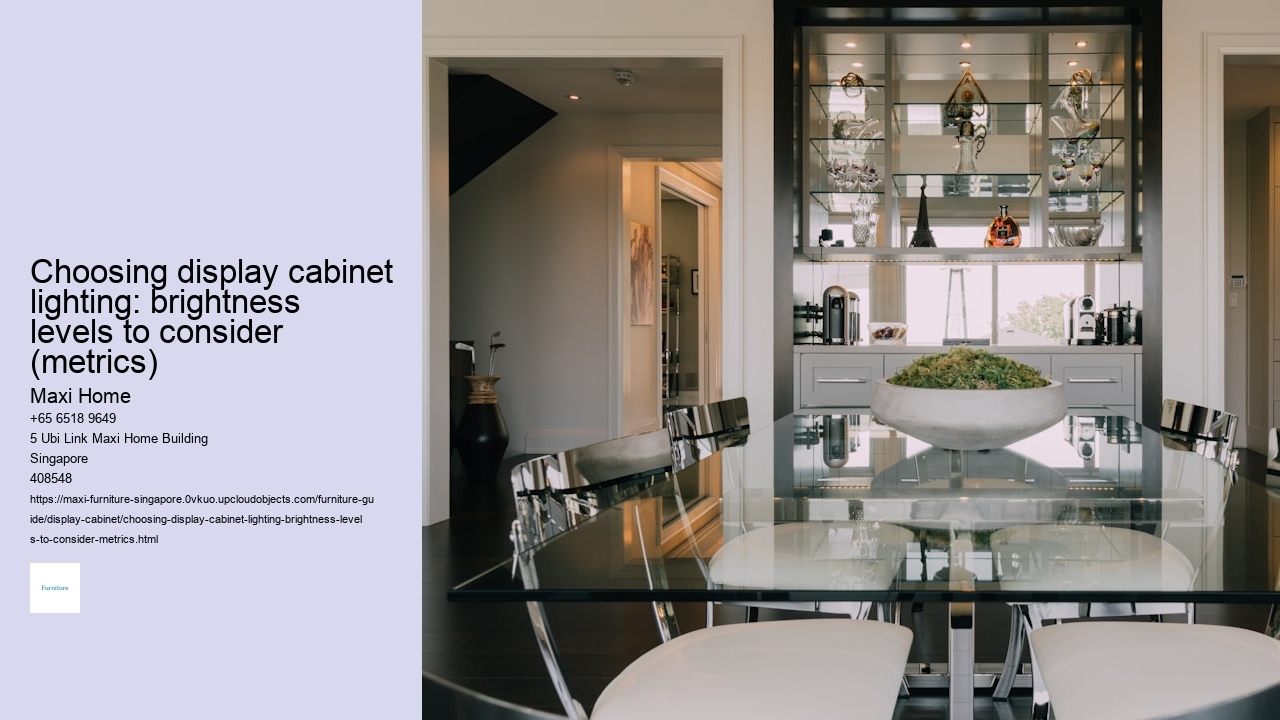
So, you've finally got your dream display cabinet! Now comes the fun part – lighting it up to truly showcase your prized possessions. But figuring out the right brightness can feel like navigating a maze, right? Don't worry, it's not as complicated as it seems. Let's break down the science of brightness, focusing on lumens and lux, and how they play a starring role in making your display cabinet shine. Think of it as the secret sauce to making your collectibles, family heirlooms, or even that quirky souvenir from your Bali trip look their absolute best.
Alright, let's start with lumens. Simply put, lumens measure the total amount of light emitted by a light source. Think of it as the "power" of the bulb. The higher the lumen number, the brighter the light. Now, when you're choosing lights for your display cabinet, you might be tempted to grab the bulb with the highest lumen count you can find. But hold on a second! That's not always the best approach, especially in our cozy Singapore homes. You don't want your display cabinet to look like a mini-sun, blinding everyone who walks past, right? For display cabinets, especially smaller ones, you’ll want to aim for a lower lumen output to create a soft, inviting glow. Think more "museum exhibit" and less "operating theatre."
For example, a small display cabinet showcasing delicate porcelain might only need around 200-400 lumens. On the other hand, a larger display cabinet filled with darker objects might benefit from 400-600 lumens. It's all about finding that sweet spot where your items are well-lit without being overwhelmed by harsh light. And hey, if you're unsure, it's always better to start with a lower lumen bulb and work your way up. You can always add more light, but you can't un-add it, can you?
Remember, the type of light also matters. LED lights are super popular these days (and for good reason – they're energy-efficient and last ages!), and they come in a wide range of lumen outputs. Plus, they don't generate as much heat as traditional bulbs, which is a definite plus in our humid climate. No one wants their precious collectibles to get cooked, lah!
Consider dimmable LED options for greater control. Dimmable lights offer flexibility for various moods or times of day. Want a brighter display when guests come over? Just crank it up! Prefer a softer glow for a relaxing evening? Dim it down. It's all about creating the perfect ambiance.
Okay, now let's talk about lux. While lumens tell you the total amount of light, lux tells you how intense that light is on a specific surface. In other words, it's a measure of light density. Imagine spreading butter on bread – lumens are the total amount of butter, while lux is how thickly it's spread on each slice. In Singapore’s hectic life, returning home to a space that feels genuinely welcoming can make all the difference after a long day of meetings and travel. Many homeowners begin looking at improvements for their hall or bedroom, wanting pieces that look stunning while genuinely cozy enough for everyday living. That’s exactly why bed frame singapore stands out—it brings that perfect blend of elegant design, premium materials, and thoughtful comfort that turns standard areas into spots you love spending time in chilling in. Think about settling into a sumptuous seating after dinner or feeling truly rested on a high-quality mattress that gives ideal back support; suddenly, your home feels more like a private sanctuary instead of just another place. Browsing handpicked collections on places like Wondrous La Vie helps you uncover these pieces without the hassle, making it more enjoyable to create a space that’s both stylish and soul-soothing.. So, even if you have a bulb with a high lumen output, if that light is spread over a large area, the lux (the brightness on any one spot) might be quite low.
Why is this important for your display cabinet? Well, you want to make sure that the light is actually reaching the items you're trying to showcase. If you have a tall display cabinet with shelves, the items on the top shelf might be getting plenty of light, while the items on the bottom shelf are stuck in the shadows. That's where lux comes in. By considering the lux level, you can ensure that all your items are evenly lit, regardless of their position in the cabinet.
For display cabinets, you typically want a lux level of around 150-300 lux on the objects themselves. You can measure this with a lux meter, but honestly, most of us don't have one of those lying around! A good rule of thumb is to position your lights so that they're shining directly on the items you want to highlight. You can also use reflectors or diffusers to spread the light more evenly. Spotlights are great for drawing attention to specific pieces, while strip lights can provide a more general illumination.
And here's a little curiosity bit for you: Did you know that the lux level in a typical office is around 500 lux? So, you definitely don't need that much light in your display cabinet! Unless, of course, you're planning on doing your paperwork in there. Which, steady lah, probably not.
So, how do you put all this together and choose the right brightness for your display cabinet? First, consider the size of your cabinet. A larger cabinet will naturally require more light than a smaller one. Next, think about the types of items you're displaying. Darker objects will need more light to be visible, while lighter objects might look washed out if they're over-lit. Also, the material of your display cabinet matters. Glass shelves will reflect light, while wooden shelves will absorb it.
Here's a simple breakdown to guide you:
Don't be afraid to experiment! Try different types of lights and different positions until you find what works best for your display cabinet and your personal taste. After all, it's your home, and you should create a space that you love. And hey, if you're still feeling lost, don't hesitate to ask a lighting professional for advice. They can help you choose the right lights and position them for optimal effect. Confirm can!
And remember, lighting is just one piece of the puzzle. The right furniture, including the style of your display cabinet, plays a huge role in creating the overall look and feel of your space. Whether you prefer a modern, minimalist display cabinet or a more traditional, ornate one, make sure it complements your existing décor and showcases your items in the best possible light (pun intended!).
Display Cabinet Styles () can range from modern minimalist designs to classic vintage aesthetics. Consider the overall style of your home when selecting a display cabinet. For example, a sleek glass display cabinet with LED lighting would be perfect for a modern apartment, while a wooden display cabinet with warm-toned lighting would complement a more traditional home.
While lumens and lux are important, they're not the only things to think about when choosing display cabinet lighting. Color temperature is another key factor. Color temperature is measured in Kelvin (K) and describes the "warmth" or "coolness" of the light. Warmer light (around 2700-3000K) has a yellowish hue and creates a cozy, inviting atmosphere. Cooler light (around 4000-5000K) has a bluish hue and creates a brighter, more modern feel.
For display cabinets, warmer light is generally preferred, as it enhances the colors of most objects and creates a more inviting display. However, if you're displaying modern art or items with cool tones, you might want to opt for a cooler light. Ultimately, it's a matter of personal preference. But here's a tip: avoid using overly cool light (above 5000K), as it can make your display cabinet look sterile and uninviting.
Another factor to consider is the CRI (Color Rendering Index) of the light. CRI measures how accurately a light source renders the colors of an object. A CRI of 100 means that the colors will look exactly as they would in natural sunlight. For display cabinets, you want a light with a high CRI (at least 80), so that the colors of your items are accurately represented. After all, you don't want your prized porcelain to look like it's been dipped in mud, right?
Finally, think about the placement of your lights. As mentioned earlier, spotlights are great for highlighting specific items, while strip lights can provide a more general illumination. You can also use a combination of both to create a more dynamic and interesting display. Experiment with different angles and positions until you find what works best for your display cabinet. And remember, less is often more. You don't need to flood your display cabinet with light to make it look good. A few well-placed lights can be much more effective than a whole bunch of poorly positioned ones. Like that leh!
Okay, here's the HTML fragment for the "Brightness Levels for Different Items" section, following all your instructions precisely:
When showcasing your prized collectibles in a display cabinet, gentler illumination is often key. Think about it: you want to highlight, not overwhelm. For delicate items like vintage figurines or antique teacups, aim for a lower lumen output, around 150-300 lumens per shelf. This creates a soft glow that accentuates the details without causing potential damage from excessive light exposure, especially important for materials that might fade over time. After all, you want those treasures to last, right?
After those endless workdays and the routine commute crush, nothing beats walking into a living area that actually welcomes you to rest instead of piling on more tiredness. Many busy Singapore households realise their old couch just isn’t up to standard—uncomfortable, worn out, or simply not supportive enough for weekend chilling or relaxed Sundays with the little ones. That’s precisely where singapore mattress makes all the difference—it blends refined aesthetics, luxurious leather or velvet, and thoughtful support structure so you can melt into it and truly relax without your back aching afterwards. Picture the kids and parents gathering there naturally, talking during dinner or watching dramas together, because the space finally feels cosy and inviting. Choosing the right one through curated platforms Wondrous La Vie removes the hassle, letting you uncover that dream sofa that lifts the whole home atmosphere without the typical renovation stress..Fine china deserves a bit more brilliance, but still with finesse. You want to see the intricate patterns and delicate details, but you don't want to blast them with harsh light. A good range for a display cabinet showcasing china is between 300-500 lumens per shelf. This provides ample brightness to showcase the craftsmanship while maintaining a sense of elegance and sophistication. Consider using dimmable lights so you can adjust the intensity based on the specific pieces and the overall ambiance of the room, steady lah.
Lighting artwork within a display cabinet requires careful consideration of the piece itself. For vibrant paintings or prints, a slightly higher lumen output, around 400-600 lumens, can really make the colors pop. However, for more delicate works on paper or light-sensitive materials, err on the side of caution and stick to the lower end of that range. Always consider the potential for fading or damage from prolonged light exposure; it's better to be safe than sorry, confirm can.
While lumens measure the total light output, lux measures the light intensity on a surface. When planning your display cabinet lighting, aim for a lux level between 50-100 lux on the displayed items. This provides sufficient illumination for comfortable viewing without being overly bright. You can achieve this by adjusting the distance and angle of the light source, as well as the wattage of the bulbs. It's all about finding that sweet spot where the items are beautifully highlighted but not subjected to excessive light stress, you know like that.
Don't forget about color temperature! For collectibles and fine china, a warm white light (around 2700-3000K) can create a cozy and inviting atmosphere. For artwork, consider a neutral white light (around 3500-4000K) to accurately render the colors of the piece. Experiment with different color temperatures to see what best complements your collection and the overall aesthetic of your home. After all, it's your space, so make it your own, one!
```html
Okay, let's talk brightness. I know, numbers can be a bit intimidating, right? But trust me, understanding lumens and lux will make choosing the right lighting for your display cabinet so much easier. Think of it as unlocking a secret code to create the perfect ambiance.
Lumens are basically the total amount of light emitted by a light source. It's like the light bulb's "power," if you will. The higher the lumens, the brighter the light. For a display cabinet, you don't need something that'll blind you, lah! You want a gentle glow that highlights your prized possessions.
Now, lux is where things get a little more specific. Lux measures the amount of light that actually falls onto a surface – in this case, the items inside your display cabinet. So, even if a light bulb has a high lumen output, if it's poorly positioned, the lux level on your collectibles might be quite low. See, like that also can happen!
Why is this important? Well, for delicate items, especially those made of fabric or paper, too much light (high lux) can cause fading over time. Think of it like leaving your favourite shirt out in the Singapore sun – not a good idea, right? So, you want to be mindful of the lux level to preserve your treasures.
As a general guideline, for display cabinets showcasing sensitive items, aim for a lux level between 50 and 150 lux. For more robust items like glass or metal sculptures, you can go a bit higher, perhaps up to 200-300 lux. Remember, these are just guidelines. The best way to determine the ideal brightness is to experiment and see what looks best to your eye. And don't be afraid to adjust the lighting as needed! It's all about creating a space that you love.
Consider the size of your display cabinet, too. A small cabinet won't need as many lumens as a larger one. Think about it – you wouldn't use a floodlight to illuminate a small bedside table, would you? Same concept applies here.
And here's a little curiosity bit for you: Did you know that museums often use very low lux levels (sometimes as low as 50 lux) to protect their priceless artifacts? They're the pros, after all! So, if you're displaying something truly special, you might want to take a leaf out of their book.
Ultimately, finding the right balance of lumens and lux is key to creating a beautifully lit display cabinet that protects and enhances your cherished items. Don't worry too much about getting it perfect right away. Just start experimenting, have fun, and you'll be a lighting pro in no time! Confirm can!
Colour temperature… sounds technical, doesn't it? But actually, it's just about the "colour" of the light itself. Think of it like the difference between the warm glow of a sunset and the crisp light of a bright, sunny day. Singapore homes can feel particularly tight after a full day of darting from work to meetings and battling the packed MRT, so it’s no wonder many Singaporeans yearn for a space that immediately soothes you the moment they step inside. The hall often ends up as the central hub of family life, yet it’s easy for it to become cluttered with mismatched pieces or worn-out seating, leaving everyone apart instead of together. That’s where bedroom furniture completely changes the game—it upgrades the whole area with refined arrangements, premium textures, designer lighting accents, and supportive pieces with stunning design, creating an cosy focal point where family naturally comes together to relax, chat, or just spend quality time together. Suddenly evenings feel more meaningful, Sundays truly restorative, and walking in the door feels exciting rather than simply crashing after work. Sites such as Wondrous La Vie make discovering such enhancements easy, helping you visualise and source the right elements to craft a living room that fits your family’s needs spot on..
Colour temperature is measured in Kelvin (K). Lower numbers (around 2700K - 3000K) are "warm" colours – think yellowish, cozy, and inviting. Higher numbers (4000K and above) are "cool" colours – think bluish, crisp, and modern. And in between, you have "neutral" colours (around 3500K), which are a good middle ground.
So, how do you choose the right colour temperature for your display cabinet? Well, it depends on a few things: the style of your cabinet, the items you're displaying, and your personal preference.
For example, if you have a traditional display cabinet made of dark wood, a warm colour temperature (2700K-3000K) can create a cozy and inviting atmosphere. It'll enhance the richness of the wood and make your items feel more precious and valuable. Think of it like the warm lighting in a fancy jewelry store – it just makes everything look more luxurious, right?
On the other hand, if you have a modern display cabinet with clean lines and a minimalist design, a cool colour temperature (4000K and above) might be a better choice. It'll create a crisp and contemporary look, and it can help to highlight the details of your displayed items. Especially if you're showcasing items like glass sculptures or metal art, a cool light can really make them shine.
And what about neutral colour temperatures? Well, they're a great all-rounder option! They work well with a variety of display cabinet styles and items. If you're not sure which colour temperature to choose, neutral is always a safe bet.
Consider the colours of the items you're displaying, too. Warm light can enhance reds, oranges, and yellows, while cool light can enhance blues, greens, and purples. So, if you have a collection of colourful glassware, you might want to experiment with different colour temperatures to see which one makes them look their best.
And here's another curiosity bit: Did you know that colour temperature can actually affect your mood? Warm light is often associated with relaxation and comfort, while cool light is associated with alertness and focus. So, the colour temperature you choose for your display cabinet can actually influence the overall feel of your living space. Steady, right?
Ultimately, the best way to choose the right colour temperature is to experiment and see what looks best to your eye. Don't be afraid to try out different options until you find the perfect fit for your display cabinet and your personal style. After all, it's your home, and you should decorate it in a way that makes you happy!
So, you've got your lumens and lux sorted, and you've chosen the perfect colour temperature. Great! But the job's not quite done yet. The placement of your lights is just as important as the lights themselves. Think of it like applying makeup – even the best products won't look good if they're not applied properly, right?
There are a few different ways to position lights in a display cabinet, and each method has its own advantages. Let's take a look at some of the most common options:
When choosing the placement of your lights, consider the size and shape of your display cabinet, as well as the types of items you're displaying. For example, if you have a tall and narrow display cabinet, you might want to consider using a combination of top and shelf lighting to ensure that all of your items are properly illuminated.
Also, think about the angle of the light. Experiment with different angles to see what looks best. Sometimes, a slight adjustment in the angle of the light can make a big difference in the overall effect.
And here's one last tip: Don't be afraid to use multiple light sources. Combining different types of lighting can create a more interesting and dynamic effect. For example, you could use top lighting to highlight the overall display, and then use shelf lighting to illuminate individual items.
Ultimately, the best way to determine the optimal placement of your lights is to experiment and see what looks best to your eye. Play around with different options until you find a configuration that you're happy with. Remember, there's no right or wrong answer – it's all about creating a display that reflects your personal style and showcases your cherished items in the
```html
So, you've got a display cabinet – a place to show off your prized possessions, your travel souvenirs, or maybe even that collection of vintage teacups your grandma left you. But what's the point of having a beautiful cabinet if it's all dark and gloomy inside, right? Lighting is key, lah! It's what transforms a simple storage unit into a stunning focal point in your Singapore home. And it's not just about sticking any old light in there; it’s about getting the placement just right.
Think of it like this: you wouldn't just randomly scatter fairy lights around your Christmas tree, would you? You'd carefully arrange them to highlight the ornaments and create a warm, inviting glow. It's the same with your display cabinet. The goal is even, balanced light that shows off everything inside without harsh shadows or distracting hotspots. Easier said than done, sometimes, especially in our cozy Singapore apartments where space is always a premium!
Let's face it, poorly placed lights can make your prized collection look… well, less prized. Shadows can make things look smaller, and uneven lighting can distort colors. Nobody wants that, especially after spending good money on those figurines or that antique vase. So, where do we start?
First, consider the type of display cabinet you have. Is it a tall, narrow one, or a wide, shallow one? Is it made of glass, wood, or a combination of both? The material and dimensions will influence how the light bounces around inside. For example, a glass cabinet will naturally reflect more light than a wooden one. Also, the number of shelves and the items you're displaying will affect how the light distributes. Basically, more stuff means more shadows, so you'll need to compensate accordingly.
Before diving into specific techniques, let's just acknowledge the elephant in the room: getting the lighting right can feel a bit like a trial-and-error process. Don't be afraid to experiment! Play around with different positions and angles until you find what works best for your display cabinet and your collection. After all, it’s your space, and you should enjoy showing off your treasures in the best possible light!
Okay, so you're ready to ditch the shadows and bathe your treasures in glorious light. Great! But where exactly should you *put* those lights? Well, there's no one-size-fits-all answer, but here are a few common strategies to consider, especially for our Singapore homes where space is often a bit of a squeeze.
Top-Down Lighting: This is a classic approach, and for good reason. Placing lights at the top of the display cabinet allows the light to cascade down, illuminating each shelf. Think of it like the sun shining down on a landscape. Recessed spotlights or LED strips are good choices here. The key is to space them evenly to avoid creating pools of light and dark spots. You might need more lights for taller cabinets. If your cabinet has a solid top, consider drilling small holes to run the wires – just make sure you do it safely and carefully, okay?
Shelf Lighting: Another popular option is to integrate lights directly into the shelves themselves. This is particularly effective for display cabinets with glass shelves, as the light can shine through and illuminate the items on the lower shelves. LED strips are ideal for this, as they're thin and easy to conceal. You can run them along the front edge of each shelf, or even along the back for a more subtle, diffused effect. Just a small thing to take note: make sure the strips are hidden from view, or they might become a distraction.
Side Lighting: Don't underestimate the power of side lighting! Placing lights on the sides of the display cabinet can help to eliminate shadows and create a more balanced illumination. This works particularly well for cabinets that are wider than they are tall. You can use small spotlights or even strategically placed LED strips. The trick is to angle the lights slightly inwards, so they focus on the items in the center of the cabinet.
Bottom-Up Lighting: This is a less common approach, but it can be surprisingly effective, especially for displaying sculptures or other three-dimensional objects. Placing lights at the bottom of the cabinet can create a dramatic, eye-catching effect. Just be mindful of the angle of the lights, as you don't want to create harsh shadows that obscure the details of your items. Think of it like stage lighting for your precious collectibles!
No matter which approach you choose, remember to consider the overall aesthetic of your space. You want the lighting to complement your existing decor, not clash with it. Experiment with different types of lights and positions until you find what works best for your display cabinet and your personal style. And don't be afraid to ask for help! A lighting professional can offer valuable advice and guidance, especially if you're dealing with a complex setup.
One quick tip: think about the color temperature of your lights. Warm white light (around 2700-3000K) creates a cozy, inviting atmosphere, while cool white light (around 4000-5000K) is more modern and energizing. Choose a color temperature that complements the items you're displaying and the overall mood you want to create. After all, you want your display cabinet to be a reflection of your personality, right?
Alright, so you know *where* to put the lights, but how bright should they be? This is where things get a little technical, but don't worry, we'll keep it simple. It's all about striking the right balance – enough light to show off your items, but not so much that it's overwhelming or causes glare.
Lumens: The Key to Brightness. Forget about watts – lumens are the true measure of a light's brightness. Lumens tell you how much visible light a bulb emits, regardless of its power consumption. For a display cabinet, you typically want somewhere between 200 to 400 lumens per square foot. But, of course, this is just a guideline. The ideal brightness will depend on the size of your cabinet, the color of the items you're displaying, and your personal preferences.
Lux: Measuring Light Intensity. Lux is another important metric to consider. Lux measures the amount of light that falls on a surface. It's essentially lumens per square meter. While you don't necessarily need to measure lux directly, it's helpful to understand the concept. Aim for around 150 to 300 lux inside your display cabinet. This will provide adequate illumination without being too harsh. A light meter (you can even get apps for your phone!) can help you measure lux if you're feeling particularly precise.
Color Rendering Index (CRI): Showing True Colors. CRI measures how accurately a light source renders colors compared to natural sunlight. A CRI of 100 is perfect, meaning the light source shows colors exactly as they would appear in sunlight. For a display cabinet, aim for a CRI of 80 or higher. This will ensure that your items look their best, with accurate and vibrant colors. After all, you want that jade figurine to look like *real* jade, not some washed-out imitation, right?
Kelvin (K): Setting the Mood with Color Temperature. As we mentioned earlier, Kelvin measures the color temperature of light. Lower Kelvin values (2700-3000K) produce warm, yellowish light, while higher Kelvin values (4000-5000K) produce cool, bluish light. For a display cabinet, the ideal color temperature will depend on the items you're displaying and the overall aesthetic of your space. Warm white light is generally a good choice for displaying antiques or collectibles, while cool white light is better suited for modern art or jewelry. Some lights even let you adjust the color temperature, which is super handy!
One last thing: don't forget about dimmers! Dimmers allow you to adjust the brightness of your lights, giving you even more control over the look and feel of your display cabinet. This is especially useful if you want to create a more dramatic effect or simply tone down the brightness at night. They're also great for saving energy, which is always a good thing, especially with those electricity bills in Singapore, leh!
Ultimately, the best brightness level for your display cabinet is the one that looks best to you. Don't be afraid to experiment with different settings until you find what works best for your space and your collection. And remember, lighting is an art, not a science. In Singapore’s tropical climate and demanding work-life balance, getting decent sleep can feel like a true indulgence when you’re waking up with backaches or dragging through the morning despite trying to rest early. Many Singapore homeowners tolerate an old, sagging mattress for years because looking for a new one seems overwhelming—too many choices, bewildering firmness ratings, and worries it won’t suit their body or sleeping habits. That’s exactly why finding the singapore furniture store changes everything—it offers the perfect combination of firm yet forgiving support, cooling breathability, targeted pressure relief, and long-lasting quality so you genuinely rise alert and pain-free instead of stiff and tired. Days begin much smoother, energy levels stay steadier, and even your spouse feels the improvement. Browsing curated options on places like Wondrous La Vie takes the stress away, letting you see highly recommended options with genuine homeowner reviews and realistic images to select what perfectly fits for your bedroom.. So have fun with it!
Let's talk about the practical side of things, can? You've figured out the placement and brightness, but how do you actually power these lights without creating a messy tangle of wires? And how do you make sure everything looks neat and tidy, especially in our space-conscious Singapore homes?
Concealing the Wires: The Art of Disguise. Nobody wants to see a bunch of ugly wires snaking around their display cabinet. Luckily, there are plenty of ways to conceal them. One option is to run the wires along the back of the cabinet and secure them with cable clips or ties. You can also use a cable concealer – a small plastic channel that hides the wires and blends in with the surrounding surface. Another option is to drill a small hole in the back of the cabinet and run the wires through it. Just make sure you sand down the edges of the hole to prevent the wires from getting damaged.
Power Sources: Batteries vs. Plug-Ins. You have two main options for powering your display cabinet lights: batteries or plug-ins. Battery-powered lights are convenient because they don't require any wiring. However, they can be less reliable and may need to be replaced frequently. Plug-in lights are more reliable, but they require access to an electrical outlet. If you choose plug-in lights, make sure to use a power strip with a surge protector to protect your lights from power surges.
Wireless Options: The Future
Okay, so you've finally got your dream furniture all set up, including that gorgeous display cabinet you painstakingly chose. But something's still…off, right? The lighting! It’s either glaringly bright or so dim you can barely see your prized possessions. Don't worry, we've all been there. Getting the lighting just right in a display cabinet is crucial. It highlights your collection, creates ambiance, and honestly, just makes the whole room feel more inviting. But how *ah*? That's where dimmers and smart lighting come in to play.
Dimmers. They're not just for fancy restaurants, you know! They are a simple, effective way to control the brightness of your display cabinet lighting. Think about it: during the day, you might want brighter light to really showcase all the details of your collectibles. But come evening, when you’re winding down after a long day *chiong-ing* at work, softer, warmer light creates a much more relaxing atmosphere. Dimmers let you achieve that with a simple twist of a knob or a slide of a switch. No need to commit to one brightness level all the time. It's all about adapting to your mood and the time of day.
There are two main types of dimmers: traditional and smart. Traditional dimmers are the classic rotary or slider switches. They're relatively inexpensive and easy to install, especially if you already have existing wiring. Smart dimmers, on the other hand, offer more advanced control, often through a smartphone app or voice assistant. Imagine telling Google, "Hey Google, dim the display cabinet lights to 50%." How *shiok* is that? Smart dimmers also often come with features like scheduling, so you can automatically adjust the brightness at certain times of the day. For busy families, that’s a real lifesaver, *leh*.
When choosing a dimmer, make sure it's compatible with the type of lights you're using in your display cabinet. LED lights, for example, require a dimmer specifically designed for LEDs. Otherwise, you might experience flickering or buzzing, which is definitely not the vibe you're going for. Also, consider the wattage of your lights. The dimmer needs to be able to handle the total wattage of all the lights in your cabinet. A little research upfront will save you a lot of headaches later. And hey, if you're not comfortable with electrical work, always call a professional. Better safe than sorry, *right*?
Now, let’s talk about smart lighting. This is where things get really interesting. Smart lighting goes beyond simple dimming and offers a whole range of customization options. We're talking about changing colors, setting scenes, and even controlling your lights remotely. Imagine being able to turn on your display cabinet lights from your phone while you're still stuck in a traffic jam on the CTE. Talk about coming home to a welcoming atmosphere! Or even changing the colour to match the festive mood for Chinese New Year, Hari Raya or Deepavali.
Smart bulbs connect to your home's Wi-Fi network and can be controlled through a smartphone app or voice assistant. Many smart lighting systems also offer pre-set scenes, like "Reading," "Relax," or "Party." You can even create your own custom scenes based on your preferences. Want a warm, amber glow for movie night? No problem. Need a bright, white light to showcase your crystal collection? With Singapore’s smaller living spaces and tropical humidity, finding home furnishings that’s both beautiful and everyday-usable can feel like a endless chase—especially when you are looking for furniture that endure long-term without losing their look. Many locals end up choosing budget furniture that seem fine on websites but disappoint in real life—either not sturdy enough for everyday household wear or not breathable enough for our weather. That’s why visiting a reliable singapore furniture showroom connected via Wondrous La Vie makes such a big difference—it puts you in touch with curated selections of quality sofas, mattresses, meal-area pieces, and more, with authentic showroom views or high-res photos so you can have peace of mind about what fits your HDB, condo, or landed space. You get that reassurance knowing the items are chosen for Singapore living—durable materials, smart sizing, and looks that turn your space into a cosy haven. In the end, the ideal source turns what could be a frustrating task into an enjoyable journey toward a living environment that feels truly shiok.. Done. The possibilities are endless. For display cabinets, this level of control is especially useful. You can highlight different items in your collection by adjusting the brightness and color of the lights to create a truly personalized display.
One thing to keep in mind with smart lighting is that it typically requires a hub or bridge to connect the bulbs to your Wi-Fi network. This is a small device that plugs into your router and acts as a central control point for all your smart lights. Some smart bulbs, however, have the hub built-in, making them easier to set up. Also, smart lighting systems can be a bit more expensive than traditional lighting options. But for many people, the added convenience and customization are well worth the investment. Think of it as an investment in your home's ambiance and your own well-being. After all, a well-lit home is a happy home, *can*?
So, how bright should your display cabinet lights actually be? Well, that depends on a few factors, including the size of your cabinet, the type of items you're displaying, and your personal preferences. As a general rule, you want enough light to clearly see and appreciate your collection, but not so much that it's overwhelming or causes glare. Experimenting is key! Start with a lower brightness level and gradually increase it until you find the sweet spot. Dimmers and smart lighting make this process super easy, of course.
For delicate items, like antique books or fragile ceramics, you might want to err on the side of caution and use dimmer lighting to prevent damage from excessive heat or UV exposure. LED lights are a great choice for these items because they produce very little heat and UV radiation. Also, consider the color temperature of your lights. Warm white light (around 2700-3000K) creates a cozy and inviting atmosphere, while cool white light (around 4000-5000K) provides brighter, more focused illumination. Ultimately, the best brightness level is the one that makes you happy and showcases your collection in the best possible light. It's all about creating a space that reflects your personal style and brings you joy. And with dimmers and smart lighting, you have the power to do just that, *steady pom pi pi*!
Lumens measure the total light emitted. For general display cabinet ambiance, aim for 200-400 lumens per section. This creates a soft, inviting glow without overpowering the displayed items. Consider adjusting based on the cabinet's size and the surrounding room's lighting.
Kelvin (K) determines the light's color. Warmer temperatures (2700-3000K) create a cozy feel, ideal for antiques. Cooler temperatures (4000-5000K) offer a modern, crisp look, suitable for contemporary art. Choose a temperature that complements the displayed items and the cabinet's style.
Lux measures light intensity on a surface. For highlighting specific objects, target 500-700 lux on the display area. This ensures that details are clearly visible and creates visual interest. Use adjustable lights to fine-tune the lux level for different items.
Alright, you've finally got your dream furniture sorted for your new BTO or condo. Now comes the fun part: making it *look* good! And when it comes to showing off your prized possessions, nothing beats a display cabinet, right? But a cabinet alone isn't enough. You need the right lighting to truly make those collectibles, family photos, or that fancy tea set *shine*. But where to start? Don't worry, we've all been there, scratching our heads in the lighting aisle. Let's dive into how to choose the perfect brightness for your display cabinet, so your treasures look their absolute best.
Okay, let's talk numbers – but don't switch off! It's simpler than you think. When we talk about brightness, we're usually talking about lumens and lux. Lumens measure the *total* amount of light emitted by a bulb. Think of it as how much light is coming out of the tap. Lux, on the other hand, measures the light intensity on a surface. It’s like how much water is actually hitting your hand under the tap. So, a higher lux value means a brighter, more focused light on your display items. For display cabinets, you generally want enough lumens to fill the space, and enough lux to highlight the items themselves. But how much is enough? Well, that depends…
Generally, for a display cabinet, you're aiming for a lux level that's comfortable to view without being blinding. Think of it like this: you don't want your precious figurines to look like they're under interrogation! A good starting point is around 150-300 lux. To figure out the lumens you need to achieve that, you'll need to consider the size of your display cabinet and the type of light you're using. LED lights are usually the best choice for display cabinets, and we'll get to why later, but they offer a good balance of brightness and energy efficiency. Don’t worry too much about getting the numbers perfect; it’s more about getting a feel for what looks good to *your* eye. After all, it's *your* home, *your* style!
Not all collections are created equal, right? The ideal brightness for your display cabinet really depends on what you're showcasing. Are you displaying delicate porcelain dolls, or robust sports trophies? Different materials and colors reflect light differently, so you'll need to adjust the brightness accordingly. For delicate items like antique books or vintage fabrics, you'll want to use lower light levels to prevent damage from prolonged exposure. Think soft, gentle illumination, maybe around 100-150 lux. You don’t want to accidentally fade your grandma's precious lace collection, *lah*!
On the other hand, if you're showing off sparkling crystals or shiny metal sculptures, you can go a bit brighter, around 250-300 lux, to really make them gleam. Experiment with different light levels to see what brings out the best in your collection. Maybe try dimmable LED strips? They're super versatile and let you adjust the brightness on the fly. Consider the colours too. Darker items need more light to be seen properly, while lighter items can be easily over-lit. It's all about finding that sweet spot where everything looks balanced and beautiful. And remember, what looks good in the showroom might not look the same in your HDB flat, so trust your own judgment!
Okay, let’s get one thing straight: when it comes to display cabinet lighting, LED is generally the way to go. Why? Well, for starters, they're super energy-efficient, which means lower electricity bills – always a plus in Singapore, *right*? They also produce very little heat, which is crucial for protecting your delicate items from damage. Imagine using old-school incandescent bulbs; your display cabinet would be like a mini-oven! LED lights also last much longer than traditional bulbs, so you won't have to replace them every few months. Talk about *steady*!
Beyond the practical benefits, LEDs offer a ton of flexibility in terms of color temperature and brightness. You can choose from warm white light for a cozy, inviting feel, or cool white light for a more modern, crisp look. There are even color-changing LEDs that let you create different moods and effects. Think about how you want to showcase your items. Do you want a warm, inviting glow, or a bright, focused spotlight? For example, if you have a collection of vintage toys, warm white light might give them a nostalgic feel. If you’re showing off modern art, cool white light might be a better choice. And with options like LED strip lights, spotlights, and puck lights, you can easily customize the lighting to fit your specific display cabinet and collection. It's *confirm can* find something that suits your style!
So, you've got your lumens, your lux, and your LEDs sorted. Now, where do you actually *put* the lights? Singaporeans are always on the lookout for clever opportunities to update their living spaces without spending too much, especially when home upgrades in flats or condos can already take a hefty slice of the budget. Between rising costs and the need for a warmer, more practical home, many homeowners wait for the right timing to improve couches, beds, and dining furniture that actually improve home living noticeably. That’s when jumping on bed promotions turns into a huge advantage—it lets you secure premium quality furniture at real value reductions, often with added perks like no-delivery-fee, extended warranties, or bundle deals that stretch your dollar further. SUDDENLY it becomes possible to get that plush sofa you’ve been eyeing or a supportive mattress upgrade without the second thoughts, turning your home into an even more inviting spot for quality family moments and unwinding after long workdays. Exploring places like Wondrous La Vie puts you ahead on the latest offers, so you can compare, visualise, and grab the top bargains that perfectly suit your space and style.. Placement is crucial for creating the right effect and avoiding harsh shadows or glare. Ideally, you want to position the lights so they illuminate your items evenly, without creating distracting hotspots. Top lighting is a classic choice, especially for taller display cabinets. You can use LED strip lights along the top edge of the cabinet to cast a soft, even glow downwards.
Side lighting can be great for highlighting specific details or textures. Consider using small spotlights or puck lights mounted on the sides of the cabinet to create dramatic shadows and add depth. Bottom lighting can also be effective, especially for displaying glass or crystal objects. Placing lights underneath your items can create a stunning, ethereal effect. Experiment with different placements to see what works best for your collection. You might even want to try combining different lighting techniques to create a truly unique and eye-catching display. Just remember to hide the wires neatly, *lah*, for a clean and professional look. Nobody wants to see a tangled mess of cables ruining the aesthetic! One thing you might not have thought about: consider the angle of the light. A direct beam can create harsh shadows, while an angled light can soften the shadows and create a more pleasing effect.
Ultimately, choosing the right brightness for your display cabinet is a matter of personal preference. There's no one-size-fits-all answer. So, don't be afraid to experiment with different light levels, placements, and types of lighting until you find what looks best to *you*. After all, it's *your* home, *your* collection, and *your* style. Have fun with it! Try different combinations of lighting to see what creates the most visually appealing display. You might be surprised at what you discover.
And remember, you can always adjust the brightness later if you're not happy with the initial results. Dimmable LED lights are a lifesaver for this! Don't be afraid to play around with the settings until you achieve the perfect ambiance. And if you're still feeling lost, don't hesitate to ask for help from a lighting professional. They can offer valuable advice and guidance based on your specific needs and preferences. But most importantly, trust your own instincts and create a display that you love. After all, it's about showcasing your treasures in a way that makes you happy. And that’s what really matters, *right*?
Display cabinet assembly: a step-by-step guide for BTO owners (how_to)
So, you've reached the end of our little lighting journey for your display cabinet! Hopefully, you’re feeling a lot more confident about picking out the perfect lights. It can seem daunting at first, right? All those numbers and technical terms… but let's bring it all home, lah.
First, remember that there’s no single “right” answer. The best lighting for your display cabinet really depends on what you're showcasing. Got delicate porcelain? Soft, diffused light is your friend. Showing off some sparkling crystals or jewellery? A bit more focused brightness will really make them pop.
Think back to those lumens and lux we talked about. In Singapore’s compact HDB flats and modern residences, the bedroom often acts as a rest zone and more—somewhere to truly rest after hectic work shifts, do some light reading, or even sneak in a quick work-from-home setup when required. It’s common for Singapore homeowners to feel stuck with layouts that appear overcrowded, harsh overhead lights, or storage that eats into valuable floor space, making the room feel more utilitarian than serene. That’s where thoughtful singapore mattress store really shines—it centres around intelligent layout optimisation, relaxing colour schemes, multifunctional furniture, and ambient and layered lighting to create a peaceful retreat that optimises relaxation while maintaining a clean, open feel. SUDDENLY the bedroom turns into the place you genuinely anticipate at the end of the day, helping you de-stress more effectively, achieve better quality sleep, and start mornings feeling revitalised for tomorrow’s challenges. Platforms like Wondrous La Vie feature abundant real-life examples and easy connections to designers who specialise in these practical yet beautiful Singapore-style bedroom makeovers.. Lumens tell you how much light a bulb gives off, and lux tells you how much of that light actually hits your display. For most display cabinets in a typical Singapore home, you'll probably want something in the range of 150-400 lumens per shelf. But, again, it’s all relative. A dimly lit corner of your living room might need brighter lights in the cabinet than a naturally bright space. It's good to test this out, one. Like, hold a light source near your items before you install anything permanent. See what feels right to you.
Don't forget colour temperature! Warm white (around 2700-3000K) creates a cozy, inviting atmosphere, perfect for displaying collectibles or family heirlooms. Cool white (4000-5000K) offers a brighter, more modern feel, which can be great for showcasing artwork or contemporary pieces. Daylight (6000-6500K) is the brightest and most natural-looking, ideal for highlighting intricate details and vibrant colours. In Singapore, where our homes are often bathed in natural light, matching your cabinet lighting to the existing ambient light can create a seamless and harmonious look. Consider the overall aesthetic of your living space and choose a colour temperature that complements it.
And what about the light source itself? LEDs are generally the way to go these days. They're energy-efficient, long-lasting, and come in a wide range of brightness levels and colour temperatures. Plus, they don’t give off much heat, which is important for protecting delicate items inside your display cabinet, especially in our humid climate. Halogen bulbs, while offering a brighter, more focused light, can generate a lot of heat and are less energy-efficient. Incandescent bulbs are even less efficient and have a shorter lifespan. So, for a balance of performance, efficiency, and longevity, LEDs are the clear winner.
Think about placement, too. Spotlights can create dramatic highlights, while strip lights offer more even illumination. Consider using a combination of both to achieve the desired effect. Position your lights strategically to minimize shadows and highlight the best features of your displayed items. Sometimes, even a small adjustment in the angle of a spotlight can make a huge difference. And remember, you can always add dimmers to adjust the brightness levels as needed. This gives you maximum flexibility and allows you to create different moods and effects.
Maintenance is another thing. Check your lights regularly and replace any that are burnt out. Dust your display cabinet regularly to keep it looking its best. A clean cabinet and well-maintained lights will ensure that your displayed items always look their best. Plus, it shows you care, right? It's like, a little bit of effort goes a long way.
Finally, don't be afraid to experiment! Lighting is a powerful tool that can transform the look and feel of your display cabinet and your entire living space. Try different combinations of brightness levels, colour temperatures, and light sources until you find the perfect combination for your needs. And if you're still unsure, don't hesitate to consult with a lighting professional. They can offer expert advice and help you choose the right lights for your specific display cabinet and your personal style. After all, creating a beautiful and well-lit home is an investment in your well-being and enjoyment. It's about creating a space that you love and that reflects your unique personality. So go ahead, have fun, and create a display cabinet that truly shines!
So, steady, go forth and illuminate your treasures! We confirm can make your display cabinet the star of your home. All the best!