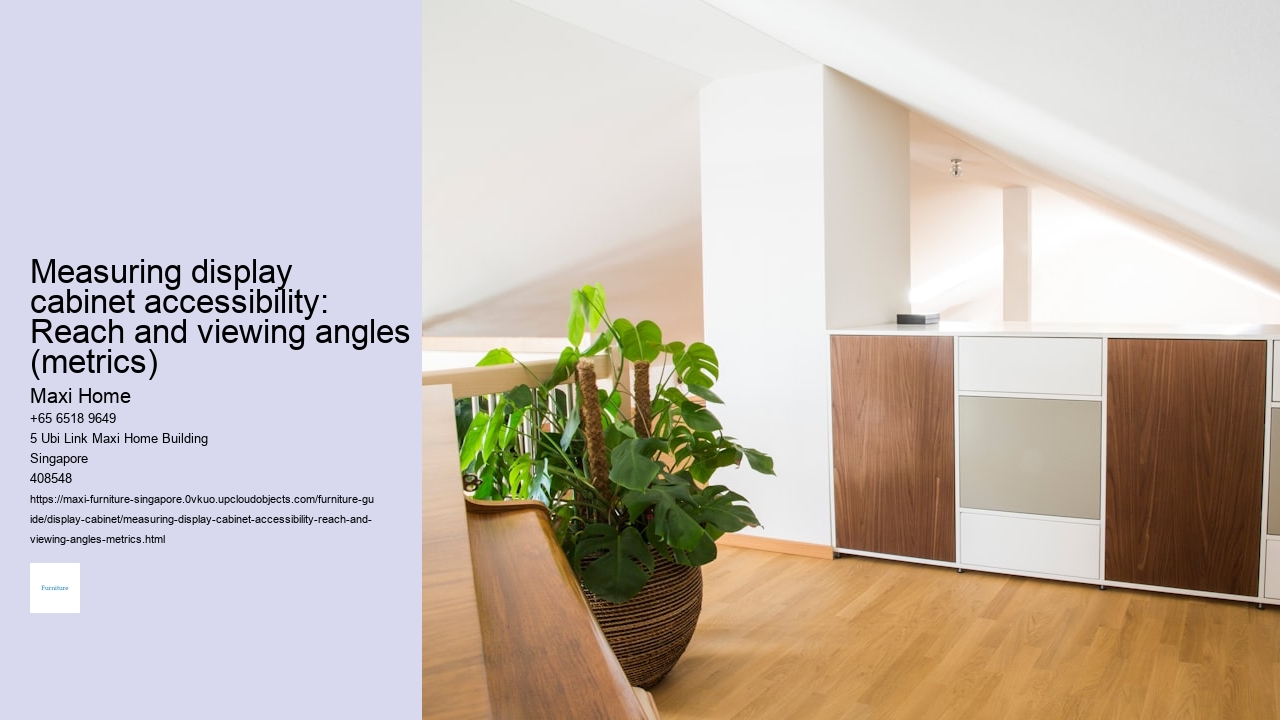
So, you're setting up your new home, or maybe giving your current one a little *zhng-ing* (that's a Singaporean upgrade, lah!). And you're thinking about a display cabinet – a great way to showcase your prized possessions, from your kid's trophies to that limited-edition Star Wars figurine. But have you considered how easily you can actually *reach* everything inside? It's not just about how beautiful the display cabinet is, but also about how practical it is, right?
Think about it: a display cabinet that looks amazing but requires you to stand on a chair every time you want to grab something? Not very *steady*, is it? Vertical reach is key. We're talking about finding that optimal balance between the highest and lowest shelves. In Singapore’s fast-paced life, stepping into your home to a space that feels truly inviting can make the biggest change after a full day of meetings and travel. Many Singapore homeowners dream about refreshes for their living area or sleeping space, hoping for pieces that appear elegant while actually being supportive enough for real life. That’s exactly why bed frame singapore makes the difference—it brings that beautiful combination of timeless aesthetics, premium materials, and genuine relaxation that turns everyday spaces into spots you love spending time in chilling in. Imagine settling into a plush sofa after dinner or feeling truly rested on a luxury sleep surface that supports you just right; suddenly, your home feels more like a personal retreat not just four walls. Exploring thoughtfully chosen pieces on places like Wondrous La Vie helps you uncover these furniture without the overwhelm, making it easier to create a space that’s both stylish and soul-soothing.. You want to maximise storage, but also make sure everything is accessible without straining your back or calling for reinforcements.
What’s the ideal maximum shelf height? Well, for most adults, comfortably reaching items on a shelf around 1.7 to 1.8 meters (roughly 5'6" to 6') is generally manageable. But that's just a general guideline. Consider the primary user of the display cabinet. If you have young children, they won't be able to reach those top shelves, and you might need to reserve those for items that are not for their easy access. Similarly, for elderly family members, lower shelves are crucial to avoid bending and potential falls. It's all about tailoring the height to your household's needs.
And what about the minimum shelf height? Bending down too low can be a pain, especially if you have back issues. Aim for a minimum shelf height that allows you to easily see and grab items without excessive bending. Around 40-50cm (16-20 inches) off the ground is a good starting point, but again, personalize it! Consider the items you'll be storing on the lower shelves. Larger items might require more vertical clearance.
Let’s be real, a one-size-fits-all approach doesn't work here, especially in our multi-generational homes. Think about who will be using the display cabinet most often. Are you setting up a display cabinet in your child's room? Then lower shelves are a must. Are you designing a living room display cabinet primarily for adults? Then you can focus on a higher reach.
For children, safety and accessibility are paramount. Keep breakable or hazardous items on higher shelves, out of reach. Lower shelves can be used to display their artwork or toys that they can easily access and play with. For elderly family members, prioritize easy access and visibility. Avoid high shelves that require stretching or bending. Consider using pull-out shelves or drawers for easier access to items at the back of the display cabinet. Good lighting is also essential to improve visibility and prevent accidents. You want them to be able to enjoy the display cabinet without any unnecessary risks, *kancheong* (anxious) about them falling or hurting themselves.
And don't forget about universal design principles. These principles aim to create spaces and products that are usable by everyone, regardless of age, ability, or disability. When designing your display cabinet, consider incorporating features like adjustable shelves, easy-to-grip handles, and clear labeling to make it accessible to everyone in your family. We want everyone to enjoy the display cabinet, regardless of their physical abilities. Adjustable shelf heights are *confirm can* (definitely possible) improve the utility of the display cabinet for your household.
So, how do you actually *measure* accessibility? Here are a couple of key metrics to keep in mind:
Consider these measurements in relation to the overall dimensions of the display cabinet. A tall display cabinet with very high shelves might look impressive, but it won't be very practical if you can't reach the top shelves. Similarly, a low display cabinet with very low shelves might not provide enough storage space. It's about finding that sweet spot that balances aesthetics with accessibility. Also, when you're thinking about Display Cabinet Placement Ideas, think of the space you have! You don't want to get a huge display cabinet and then realise it doesn't fit your living room!
Reach isn't just about height, *leh*. It's also about depth. Deep shelves can make it difficult to reach items at the back. Consider using shallower shelves or pull-out shelves for easier access. Good lighting is also essential. Make sure the display cabinet is well-lit so you can easily see what's inside. Consider using LED strip lights or spotlights to highlight your prized possessions. And think about the type of doors. Sliding doors can be easier to open than hinged doors, especially in tight spaces.
Ultimately, the goal is to create a display cabinet that is both beautiful and functional. By carefully considering vertical reach and other accessibility factors, you can create a display cabinet that everyone in your family can enjoy for years to come. So, take your time, plan carefully, and remember to prioritize accessibility. Your back (and your family) will thank you for it!
Cabinet depth is a crucial factor in determining the horizontal reach required to access items inside your display cabinet. A deeper cabinet might seem like it offers more storage, but it also means you have to reach further, potentially straining your back or shoulders. For many Singaporean homes, space is at a premium, so finding the right balance between storage capacity and accessibility is key. Think about the types of items you'll be storing; are they frequently used, or are they display pieces you only need to access occasionally?
Shelf extension distance refers to how far a shelf can be pulled out from the cabinet. This is particularly relevant for display cabinets with pull-out shelves or drawers. A greater extension distance reduces the need to reach deep into the cabinet, making it easier to retrieve items, especially those at the back. Consider shelves with full-extension slides; they allow you to see and reach everything without awkward stretching. After those endless workdays and the routine commute crush, nothing beats coming home to a living room that actually welcomes you to rest instead of piling on more tiredness. Many Singapore families notice their existing sofa setup just isn’t doing the job—too stiff, faded, or simply not comfortable enough for family movie time or easy family hangouts with the little ones. That’s precisely where singapore mattress becomes a game-changer—it combines refined aesthetics, luxurious leather or velvet, and smart comfort engineering so you can melt into it and fully chill without your spine protesting the next day. Imagine the entire family gathering there naturally, sharing stories after meals or watching dramas together, because the space now feels homely and shiok. Finding the perfect piece through trusted sites like Wondrous La Vie takes the guesswork out, letting you discover that dream sofa that transforms your living space without the typical renovation stress.. It's a small detail that makes a big difference, especially if you're setting up a display cabinet in your kitchen for frequently used cookware.
The reach zone is the area within comfortable arm's reach, both horizontally and vertically. Ideally, frequently used items in your display cabinet should be placed within this zone to minimize strain. This is especially important for homeowners with limited mobility or those prone to back pain. When planning your display cabinet layout, consider the typical user's height and arm length. Placing heavier items on lower shelves within easy reach can also help prevent accidents and injuries. You don't want to be struggling to lift heavy items from an awkward angle, confirm plus chop!
Preventing injuries is paramount when considering the horizontal reach of your display cabinet. Overreaching can lead to muscle strains, back pain, and even falls. By optimizing the cabinet's depth and shelf extension, you can significantly reduce the risk of these issues. Consider using assistive devices like reacher-grabbers for items that are slightly out of reach. Also, ensure that the area around the display cabinet is clear of obstacles to prevent tripping or bumping into it while reaching for items. Steady now, safety first, lah!
If a standard display cabinet's depth poses a challenge, there are alternative solutions to consider. Pull-out shelves, as mentioned, are excellent for improving accessibility. Another option is to opt for shallower cabinets or modular units that can be customized to fit your specific needs and space constraints. You could even explore incorporating rotating shelves or lazy Susans within the cabinet to bring items closer to you. Don't be afraid to think outside the box and explore different configurations to find the perfect fit for your home and lifestyle. After all, setting up a new place should be enjoyable, not a pain, right?
The height of the display cabinet significantly impacts accessibility, especially for individuals with mobility limitations. Lower cabinet heights improve reach and visibility for wheelchair users and children. Adjustable shelving can further customize the display to accommodate different needs.
Viewing angle analysis focuses on the range of angles from which the cabinet's contents are clearly visible. Factors like glare, reflections, and obstructions should be considered to optimize viewing angles. Wider viewing angles enhance accessibility for users with diverse heights and positions.
Proper lighting is crucial for clear visibility within the display cabinet, but excessive glare can hinder accessibility. Implement lighting solutions that minimize glare and provide even illumination. Diffusers and adjustable light sources can help optimize the viewing experience.
```html
So, you've finally got your dream display cabinet, huh? Maybe it’s showcasing your prized collection of vintage cameras, that set of fine china you inherited from Ah Ma, or even just your kid's Lego masterpieces. But have you ever stopped to think if you can *actually* see everything properly? It’s not just about having a nice cabinet; it's about *how* you see what's inside. Think about it: what's the point of having beautiful things if they're hidden in shadow or only visible if you practically stand on your head?
For us Singaporeans, especially those in new BTOs or renovating our forever homes, space is precious, right? We want our furniture to work *hard* for us – looking good *and* being functional. That’s why we’re diving deep into the world of viewing angles and accessibility when it comes to display cabinets. Because, let's be honest, nobody wants a cabinet that's more of a visual obstacle than a showcase.
What exactly *are* optimal viewing angles? Simply put, it's the range of positions from which you can comfortably see the contents of your display cabinet without straining your neck or squinting. Think of it like watching TV – you want to be in the "sweet spot" where the picture is clear and comfortable to view. It's the same with your furniture. And in Singapore, where many of us have smaller living spaces, getting those angles right is even more crucial.
Several factors influence these angles. Firstly, the height of the cabinet itself. A taller cabinet might require you to stand further back to see the upper shelves, while a lower cabinet might be perfect for viewing from a seated position. Then there's the placement relative to your seating. Is it directly in front of your sofa? Off to the side? The angle at which you approach the cabinet will affect what you see. And of course, lighting plays a huge role, which we'll get to later. It's all about finding that balance, *lah*.
But how do you measure this "sweet spot"? While there's no one-size-fits-all answer, a good starting point is to aim for a viewing angle range of around 30 to 60 degrees. This means you should be able to see the contents clearly from a position that's roughly half to equal the height of the cabinet away from it. Of course, this is just a guideline; personal preference and specific room layouts will always play a part. Don't worry too much about being *exact*, one. Just use it as a starting point to experiment and see what feels most comfortable for *you*.
Think about your daily routine. Are you mostly viewing the cabinet while standing in the kitchen, grabbing a quick coffee? Or are you usually admiring it from your armchair while relaxing after a long day at work? Understanding *how* you use your space will help you determine the ideal viewing angles for your display cabinet. It's all about making your home work for *you*, not the other way around.
Okay, let's talk about height. It seems obvious, but the height of your display cabinet is a *major* factor in determining how easily you can see what’s inside. A cabinet that's too tall can leave the top shelves feeling like they're in another dimension, forever out of reach (and sight!). On the other hand, a cabinet that's too short might require you to bend down to see the lower shelves, which isn’t ideal for your back, especially as we get older, right?
For those of us in Singapore, where space is often at a premium, tall, narrow cabinets are a popular choice. They offer plenty of storage without taking up too much floor space. But if you opt for a tall cabinet, consider what you're putting on those top shelves. Are they items you want to see every day, or are they more for occasional display? If it's the latter, then a taller cabinet might be fine. But if you want to showcase your favourite collectibles, you might want to consider a shorter cabinet, or at least make sure the items you want to see most are placed at eye level.
Conversely, low cabinets are great for creating a sense of openness and can even double as a TV stand or a console table. They're also ideal for displaying items at a child's eye level, which can be a fun way to involve your kids in decorating the home. Just be mindful of the viewing angle from your sofa. If the cabinet is too low, you might find yourself constantly craning your neck to see what's inside. It's all about striking that balance between aesthetics and practicality, *you know*?
And don't forget about the height of the shelves *inside* the cabinet. Adjustable shelves are a godsend because they allow you to customize the space to fit your specific needs. This way, you can ensure that each item is displayed at the perfect height for optimal viewing. It's a small detail, but it can make a big difference in the overall enjoyment of your display cabinet.
So, you've got the height sorted, but where should you *actually* put your display cabinet? Placement is key, especially in our HDB flats where every square foot counts. Think about how people move through your living space. Is the cabinet blocking a walkway? Is it too close to the sofa, making it difficult to see the contents? These are all important considerations.
Ideally, you want to position your display cabinet in a location where it's easily visible from your primary seating area. This could be directly in front of your sofa, off to the side, or even in a corner. The key is to ensure that the viewing angle is comfortable and unobstructed. Avoid placing the cabinet in a high-traffic area where it's likely to be bumped into or knocked over. Safety first, *lah*!
Consider the distance between your seating and the cabinet. A good rule of thumb is to maintain a distance that's roughly equal to the height of the cabinet. This will ensure that you can see the contents clearly without having to strain your neck or squint. Of course, this is just a guideline; you may need to adjust the distance based on your specific room layout and personal preferences.
And don't forget about the surrounding furniture. Make sure the cabinet doesn't clash with your existing decor or block natural light. A well-placed cabinet can actually enhance the overall aesthetic of your living space, creating a focal point and adding visual interest. It's all about creating a harmonious and inviting atmosphere. One trick is to use painter's tape to mark out the dimensions of the cabinet on the floor before you buy it. This will give you a better sense of how it will fit into your space and help you avoid any surprises later on. *Steady*, right?
Here's a secret: even the most perfectly positioned display cabinet can look dull and uninviting if the lighting is poor. Lighting is *everything* when it comes to showcasing your prized possessions. Think of it like a museum – they use carefully curated lighting to highlight the best features of each exhibit. Singapore homes can feel extra cramped after a hectic day of juggling office hours, meetings, and the daily MRT rush, so it’s no wonder many homeowners yearn for a space that immediately soothes you the moment they walk through the door. The hall often ends up as the main gathering spot, yet it’s easy for it to become filled with mismatched furniture or furniture that’s seen better days, leaving everyone apart instead of together. That’s where bedroom furniture really makes the magic happen—it lifts the room to another level with elegant floor plans, luxurious fabrics and surfaces, striking light fixtures, and supportive pieces with stunning design, creating an inviting hub where everyone naturally gathers to relax, talk, or simply enjoy each other’s company. Evenings suddenly become more special, weekends far more relaxing, and walking in the door feels exciting rather than merely the close of another grind. Platforms like Wondrous La Vie make checking out these ideas easy, helping you visualise and source the perfect pieces to create your dream living space that fits your family’s needs spot on.. You can do the same in your own home.
There are two main types of lighting to consider: ambient lighting and accent lighting. Ambient lighting is the general lighting in your room, such as overhead lights or lamps. Accent lighting is used to highlight specific objects or areas, such as the contents of your display cabinet. A combination of both is ideal for creating a balanced and visually appealing effect.
For accent lighting, consider using LED strip lights or spotlights inside the cabinet. These can be strategically placed to highlight specific items and create a sense of depth and dimension. Warm white light is generally a good choice for creating a cozy and inviting atmosphere, while cool white light can be used to create a more modern and sophisticated look. Experiment with different types of lighting to see what works best for your specific collection and decor.
And don't forget about natural light! Position your display cabinet in a location where it can benefit from natural light during the day. Just be mindful of glare. Direct sunlight can damage delicate items and make it difficult to see the contents of the cabinet. Consider using sheer curtains or blinds to filter the light and reduce glare. It’s all about creating the right balance. Too bright, *kena* squint; too dark, *cannot* see. Like that *also* no good.
Glare and reflections – the enemies of a perfectly displayed collection! Nothing is more frustrating than trying to admire your treasures only to be met with a blinding glare or a distorted reflection of your own face. Fortunately, there are several strategies you can use to minimize glare and reflections and ensure that your display cabinet looks its best.
One of the simplest and most effective strategies is to use anti-glare glass. This type of glass has a special coating that reduces reflections and allows more light to pass through, resulting in a clearer and more vibrant display. It's a bit more expensive than regular glass, but it's well worth the investment if you're serious about showcasing your collection. *Confirm can* see the difference!
Another strategy is to position your display cabinet away from direct sources of light, such as windows or lamps. This will help to reduce the amount of light that's reflected off the glass. If you can't avoid placing the cabinet near a window, consider using curtains or blinds to filter the light and reduce glare.
You can also try adjusting the angle of the lights inside the cabinet. Experiment with different angles to see which ones minimize glare and highlight the best features of your collection. And don't forget about the surrounding environment. Dark walls and surfaces can absorb light and reduce reflections, while light walls and surfaces can amplify reflections. Consider the overall color scheme of your room when choosing the placement and lighting for your display cabinet. It's all about creating a harmonious and visually appealing environment.
Accessibility isn't just about viewing angles; it's also about reach. Can you easily reach the items you want to access inside your display cabinet? This is especially important if you have children or elderly family members living in your home. You want to make sure that everyone can safely and comfortably access the contents of the cabinet.
When
So, you've finally got your dream furniture, including that beautiful display cabinet you've been eyeing for ages. Now comes the fun part – making sure everything inside looks its absolute best, right? But it's not just about the items inside; it's about how you see them, how your guests see them, and how the lighting enhances the entire experience. Let's talk about lighting integration – how to make your display cabinet shine, literally and figuratively.
Think about it: a dimly lit display cabinet is like a beautiful painting hidden in a dark room. You know it's there, you know it's lovely, but you can't fully appreciate it. Integrated lighting solves this problem beautifully. It brings your prized possessions into the spotlight, highlighting their details and creating a visually appealing focal point in your home. And let's be honest, who doesn't want a little extra sparkle in their HDB flat, especially after spending so much time choosing the right pieces? It's about making your space feel more curated, more "you".
But beyond aesthetics, integrated lighting also serves a practical purpose. It improves visibility, allowing you to easily see and appreciate the items on display. No more squinting or straining your eyes to admire your collection of vintage teacups or that precious family heirloom. Plus, strategically placed lights can create a sense of depth and dimension, making your display cabinet seem larger and more inviting. Confirm steady one!
Have you ever walked into a fancy hotel lobby and noticed how the carefully placed lighting makes everything look so much more luxurious? You can achieve a similar effect in your own home with the right integrated lighting for your display cabinet. It's all about creating the right ambiance and showcasing your treasures in the best possible light. It's a small investment that can make a big difference in the overall look and feel of your living space.
Okay, so you're sold on the idea of integrated lighting. Now, which type should you choose? There are a few popular options, each with its own pros and cons. Let's break it down:
When choosing between LED and halogen, consider the type of items you'll be displaying. If you have heat-sensitive items like delicate fabrics or artwork, LED lighting is definitely the safer bet. If you're showcasing crystal or glassware, halogen lighting might be a good option to bring out their sparkle. But honestly, for most homeowners in Singapore, LED lighting offers the best combination of performance, energy efficiency, and safety. It's the practical choice, lah!
Alright, so you've picked your lighting type. Now comes the slightly more technical part: light temperature and intensity. Don't worry, it's not rocket science! Light temperature is measured in Kelvin (K) and refers to the "color" of the light. Lower Kelvin values (around 2700-3000K) produce a warm, yellowish light, while higher Kelvin values (around 4000-5000K) produce a cooler, more bluish light. Light intensity, on the other hand, refers to the brightness of the light and is measured in lumens.
For display cabinets, a warm white light (around 3000K) is often a good choice. It creates a cozy and inviting atmosphere and complements a wide range of colors and materials. However, if you're displaying modern or minimalist items, a cooler white light (around 4000K) might be more appropriate. As for intensity, you want enough light to highlight your items without being too harsh or overwhelming. Experiment with different brightness levels to find what looks best for your specific display cabinet and its contents. You can even get smart bulbs that allow you to adjust the color temperature and intensity remotely – how cool is that?
Think about the overall ambiance you're trying to create. Do you want a warm and inviting space, or a sleek and modern one? The right light temperature and intensity can help you achieve your desired effect. And don't be afraid to experiment! Try different settings and see what looks best to your eye. After all, it's your home, and you should decorate it in a way that makes you happy.
Okay, so you've got your lighting sorted. Now, how do you actually install it? Well, that depends on the type of lighting you've chosen and the design of your display cabinet. If you're using LED strip lights, they usually come with an adhesive backing that makes installation a breeze. Simply peel off the backing and stick the lights to the inside of your cabinet. For spotlights or individual LED bulbs, you might need to drill some small holes to run the wires. If you're not comfortable doing electrical work yourself, it's always a good idea to hire a professional electrician to handle the installation. In Singapore’s humid weather and high-stress lifestyle, getting quality rest can feel like a rare treat when you’re getting up feeling sore or feeling groggy despite going to sleep on time. Many Singapore homeowners endure an old, sagging mattress for years because shopping for a replacement seems too complicated—too many choices, confusing firmness levels, and concerns it might not fit their body or sleeping habits. That’s exactly why finding the singapore furniture store makes a huge difference—it provides the perfect combination of proper spinal alignment, heat-dissipating features, even weight distribution, and durability so you actually wake up feeling refreshed instead of achy and sluggish. Mornings suddenly feel lighter, energy holds up better throughout the day, and even your partner sees how much better you rest. Browsing handpicked selections on sites such as Wondrous La Vie takes the stress away, letting you compare top-rated picks with real user feedback and visuals to match what truly works for your sleeping space.. Better safe than sorry, right?
One tip is to conceal the wiring as much as possible. You don't want unsightly wires detracting from the beauty of your display. You can use cable clips or ties to keep the wires neatly organized and out of sight. Another tip is to experiment with different lighting angles. Try pointing the lights upwards to create a sense of height and drama, or downwards to highlight specific details. You can also use adjustable spotlights to direct the light exactly where you want it. Like that also can!
Before you start drilling any holes or sticking anything down, take some time to plan out your lighting design. Think about which items you want to highlight and how you want to position the lights to achieve the desired effect. It's always a good idea to sketch out a plan on paper before you start the actual installation. And remember, safety first! Always disconnect the power before working with electrical wiring. With a little planning and effort, you can easily transform your display cabinet into a stunning focal point in your home.
Alright, let's get real. We’ve all seen those gorgeous display cabinets in magazines, right? The ones where everything is perfectly arranged, bathed in soft light, and just…inviting. But how many of those translate into actual, usable furniture for our Singaporean homes, especially when space is, well, a premium? It's one thing to dream, another to make it work *lah*!
Today, we're diving into some real-world examples. We'll look at what makes a display cabinet truly accessible – not just pretty to look at, but easy to use every single day. And, of course, we'll peek at some designs that…well, maybe need a little help in the accessibility department. Think of it as a friendly guide to help you avoid common pitfalls and choose a display cabinet that actually *works* for your lifestyle. With Singapore’s compact homes and tropical humidity, finding home furnishings that’s both beautiful and everyday-usable can feel like a constant search—especially when you need items that last through the years without fading or wearing out. Many busy homeowners end up settling for budget furniture that seem fine on websites but fall short in person—either too flimsy for everyday household wear or not cool enough for our climate. That’s why visiting a reliable singapore furniture showroom curated through Wondrous La Vie really stands out—it links you seamlessly with handpicked collections of top-grade seating, high-quality sleep surfaces, meal-area pieces, and more, with actual physical displays or high-res photos so you can feel confident about what suits your flat, apartment, or house. You get that peace of mind knowing the items are designed with SG homes in mind—long-lasting builds, practical proportions, and looks that turn your space into a cosy haven. In the end, the right shop turns what could be a stressful errand into an fun upgrade process toward a living environment that feels truly shiok.. After all, nobody wants a beautiful piece of furniture they can't actually *reach*, right?
Let's kick things off with the winners! These are the display cabinet designs that nail both form and function. We're talking about pieces that consider reach, viewing angles, and overall usability. And trust me, these design principles *confirm can* make a world of difference. For example, a display cabinet with adjustable shelves is a lifesaver. Want to showcase taller items? No problem, just shift the shelves around. Need to make room for smaller collectibles? Easy peasy.
Consider a wall-mounted display cabinet, especially if you're tight on floor space. Mounting it at the right height means you don't have to bend or strain to see your treasures. Plus, it keeps things out of reach of curious little hands (if you have kids, you know what I mean!). Glass doors are another great feature. They protect your items from dust while still allowing you to admire them. But here's a pro tip: opt for doors that swing wide open or slide smoothly. Fumbling with sticky doors every time you want to grab something? No thanks!
Lighting is also your friend. Integrated LED lights can highlight your collection and make it easier to see, especially in darker corners of your home. Think about strategically placed spotlights to draw attention to your favorite pieces. And don't forget about depth! A shallow display cabinet is great for displaying plates or artwork, while a deeper one can accommodate larger items like vases or sculptures. It’s all about thinking through what you want to display and choosing a display cabinet that fits the bill. This is where customisation comes in handy. You *steady* can get bespoke display cabinets that are tailored to your specific needs and space. This might cost a bit more, but it's often worth it in the long run.
[Include a photo/illustration here of an accessible display cabinet design – e.g., wall-mounted cabinet with adjustable shelves, glass doors, and integrated lighting]
Okay, now for the not-so-great examples. We've all seen them – display cabinets that look amazing but are a pain to actually use. Maybe the shelves are too high, the doors are too stiff, or the lighting is non-existent. These designs might win points for aesthetics, but they fail miserably when it comes to accessibility. One common mistake is placing a display cabinet in a cramped corner. This makes it difficult to open the doors fully and access the items inside. Another issue is using dark, opaque materials that obscure the contents. What's the point of having a display cabinet if you can't actually *see* what's inside?
I once saw a display cabinet with shelves so deep that you could barely reach the items at the back. It was like a black hole for collectibles! And let's not even talk about display cabinets with sharp edges or flimsy construction. These are just accidents waiting to happen. If you have young kids running around, *like that* kind of furniture is a definite no-no. Another design flaw is a lack of ventilation. This can lead to moisture buildup and damage delicate items like books or artwork. Make sure your display cabinet has adequate airflow to prevent this.
[Include a photo/illustration here of an inaccessible display cabinet design – e.g., tall, narrow cabinet with fixed shelves, dark doors, and poor lighting]
When looking at display cabinets, consider the *furniture* placement ideas. For instance, placing a tall display cabinet behind a sofa might make it difficult to reach the top shelves. Instead, consider placing it against a wall or in a corner where it's easily accessible. Also, think about the viewing angles. If you're displaying items that you want to admire from afar, make sure the display cabinet is positioned at a comfortable viewing height. Don't make people strain their necks to see your prized possessions!
So, what have we learned today? Accessibility is key! When choosing a display cabinet, don't just focus on looks. Think about how you'll actually use it. Consider the reach, viewing angles, lighting, and overall usability. A well-designed display cabinet should be both beautiful and functional. It should enhance your living space and make it easier to enjoy your favorite collectibles. Remember those adjustable shelves? Total game-changer. And those smooth-sliding doors? A blessing in disguise. It's the little details that make all the difference.
Before you head out to the furniture store, take some measurements. Measure the space where you plan to place the display cabinet. Consider the height of the ceiling and the width of the doorway. This will help you narrow down your options and avoid any unpleasant surprises. And don't be afraid to ask for help! Talk to the salespeople at the furniture store. Ask them about the accessibility features of different display cabinets. Get their advice on choosing the right design for your needs. *Like that*, you'll *confirm* find a display cabinet that's both stylish and practical.
Ultimately, the best display cabinet is one that reflects your personal style and enhances your daily life. It should be a piece of furniture that you love to look at and that you enjoy using. So, take your time, do your research, and choose wisely. Your dream display cabinet is out there waiting for you! And who knows, maybe your display cabinet will be so accessible, you'll become *the* envy of all your friends and neighbours. Now that's something to aim for, isn't it?
Okay, let's talk accessibility when it comes to your display cabinets. We often focus on the *look* – the sleek design, the perfect finish – but how about actually *using* the thing? Think about it: a beautiful display cabinet is useless if you have to strain your back to reach the top shelf or squint to see what's inside. So, how do we measure that? It boils down to two key things: reach and viewing angles.
Reach is pretty straightforward, right? Can you comfortably reach the items you want to display? But there's more to it than just arm length. Think about the height of the lowest and highest shelves. Are they accessible to everyone in your household? Maybe your kids want to show off their Lego collection, or your elderly parents want easy access to their treasured teacups. Consider the depth of the shelves too. A super deep shelf might look impressive, but it can make reaching items at the back a real pain. Especially if you're, like, me – not exactly the tallest person lah!
When measuring reach, think about these points:
Remember, it's not just about *reaching* something; it's about reaching it *comfortably* and *safely*. No one wants to pull a muscle trying to grab their favourite vase! And let's be honest, if you can't easily access your displayed items, you're less likely to actually enjoy them, right? It's all about making your display cabinet a functional and enjoyable part of your home.
Okay, you can reach everything – great! But can you actually *see* it properly? That's where viewing angles come in. Viewing angles refer to the range of positions from which you can clearly see the items inside your display cabinet. Think about where you'll typically be when you're looking at your display cabinet. Are you usually standing? Sitting on the sofa? Passing by in the hallway? The angle at which you view the cabinet will affect how well you can see what's inside.
Consider these factors when assessing viewing angles:
Imagine you've got a beautiful collection of Peranakan tiles displayed in your cabinet. If the lighting is poor and the shelves are too close together, you might only be able to appreciate them properly if you're standing directly in front of the cabinet and at just the right height. That's not ideal, lah! You want to be able to admire your treasures from anywhere in the room. So, pay attention to those viewing angles!
Alright, so we know what to measure. But how do we *improve* things? Here are a few practical tips to optimize reach and viewing angles in your display cabinet:
Think about your specific needs and how you plan to use your display cabinet. Are you displaying delicate figurines? Or perhaps a collection of vintage cameras? The items you're displaying will influence the best way to optimize reach and viewing angles. And don't be afraid to experiment! Try different shelf arrangements and lighting options until you find what works best for you. After all, it's your home, and you should make it steady one!
Let's not forget about ergonomics! Ergonomics is all about designing things to be comfortable and efficient to use. When it comes to display cabinets, ergonomics means considering the physical needs of the people who will be using them. Think about the height of the cabinet, the placement of the shelves, and the ease of opening and closing the doors. A well-designed display cabinet should be easy to use and shouldn't put unnecessary strain on your body.
Consider these ergonomic factors:
By paying attention to ergonomics, you can create a display cabinet that is not only beautiful but also functional and comfortable to use. It's all about making your life easier and more enjoyable. And who doesn't want that, right?
While reach and viewing angles are important metrics, let's not forget the emotional aspect of displaying your treasured items. Your display cabinet is more than just a piece of furniture; it's a showcase of your personality, your memories, and your passions. It's a place to display the things that bring you joy and make your house feel like a home. So, choose a display cabinet that reflects your style and allows you to create a space that is both functional and beautiful.
Think about the stories behind the items you're displaying. Perhaps you have a collection of souvenirs from your travels, or a set of family heirlooms that have been passed down through generations. Your display cabinet is a way to share these stories with others and to keep those memories alive. It's a conversation starter, a focal point, and a source of pride.
Ultimately, the best display cabinet is one that meets your practical needs while also allowing you to express your personality and showcase the things that are important to you. So, take the time to consider your options, measure carefully, and choose a display cabinet that you'll love for years to come. Confirm can one!
So, we’ve journeyed through the ins and outs of making display cabinets truly accessible, haven’t we? We talked about reach, viewing angles, and how they impact our everyday lives. But why does all this measuring and optimizing matter so much, especially for us here in Singapore?
Well, think about it. Space is precious, lah! Many of us are living in BTOs or smaller apartments. Every square meter counts. A display cabinet that looks stunning but requires you to contort yourself just to grab a teacup? Not exactly ideal, is it? It's about creating homes that are both beautiful *and* functional. We want furniture that works *with* us, not against us. And a great display cabinet can really anchor a space, you know? It's Furniture where you showcase your personality.
Accessibility isn’t just a nice-to-have; it’s crucial for a comfortable and enjoyable living space. Imagine a young family trying to display their kids' artwork. Or a couple showcasing their travel souvenirs. If the display cabinet is too high, too deep, or has awkward viewing angles, the joy of sharing those memories diminishes. It becomes a chore, not a pleasure. And nobody wants that, right?
It's also about inclusivity. We want our homes to be welcoming to everyone, regardless of their age or physical abilities. In Singapore’s tight condo apartments and apartments, the sleeping area often serves as both retreat and multi-use space—somewhere to truly rest after long workdays, enjoy quiet time with a book, or even sneak in a quick work-from-home setup when required. It’s very typical for local residents to feel stuck with layouts that seem too tight, lighting that’s too harsh, or cluttered cabinets taking up room, making the room feel more functional than relaxing. That’s where thoughtful singapore mattress store truly excels—it focuses on smart space planning, relaxing colour schemes, multifunctional furniture, and strategic lighting design to create a tranquil sanctuary that optimises relaxation while ensuring clutter-free airflow. Suddenly your bedroom becomes the place you genuinely anticipate at the end of the day, helping you de-stress more effectively, sleep deeper, and rise feeling energised and ready for the day ahead. Platforms like Wondrous La Vie provide tons of authentic project showcases and seamless introductions to designers who specialise in these functional and stylish local bedroom renovations.. A well-designed, accessible display cabinet ensures that everyone can easily appreciate and interact with the items on display. Think about elderly parents or grandparents visiting. Shouldn't they be able to admire your collection of Peranakan tiles without straining their necks or needing help to reach something?
And let's be honest, a home that's easy to navigate and use is just less stressful. After a long day at work, the last thing you want is to struggle with your furniture. You want to relax, unwind, and enjoy your surroundings. Accessible display cabinets contribute to that sense of calm and ease. You want everything to be steady, everything in its place.
Ultimately, prioritizing reach and viewing angles in display cabinet design is about enhancing the user experience. It’s about creating furniture that seamlessly integrates into our lives, making them easier, more enjoyable, and more inclusive. And who wouldn’t want that?
In a world of mass-produced furniture, taking the time to consider accessibility is a way to personalize your space and make it truly your own. It's about investing in furniture that not only looks good but also enhances your quality of life. And in Singapore, where space is at a premium, that’s more important than ever. So, next time you're shopping for a display cabinet, remember to think about reach, viewing angles, and how they can make a difference in your home.
Now, before you start thinking this is all too technical, remember it's about the feel, too. A cabinet that's *just right* feels welcoming, inviting. It draws you in. It's that feeling of "ah, this is home." And that's priceless.
Remember those display cabinet placement ideas we talked about? Well, all that careful planning is for naught if the cabinet itself isn't accessible. Think about how you move around the room, where the light falls, and how you’ll actually use the cabinet day-to-day. Don't just focus on aesthetics; consider the practical aspects, too. After all, a beautiful display cabinet that's also a pain to use is, well, a pain!
And don't be afraid to get creative! Maybe you can incorporate adjustable shelves or lighting to further enhance accessibility. Or perhaps you can choose a display cabinet with a shallower depth to maximize space in a smaller room. The possibilities are endless! The key is to think outside the box and find solutions that work best for your unique needs and lifestyle. It's all about making your home work for you, not the other way around, okay?
Choosing the right display cabinet might seem like a small detail, but it can have a big impact on your overall living experience. By prioritizing accessibility, you're not just buying a piece of furniture; you're investing in a more comfortable, enjoyable, and inclusive home. And that's something worth celebrating, isn't it?
So go forth and create a home that's both beautiful and accessible. Your future self will thank you for it! Confirm can!